Saturday, May 27, 2006
faithmaps.org has relaunched
Thanks to Scot McKnight over at Jesus Creed for mentioning our relaunch. Just a point of clarification though; it's faithmaps.org that's relaunched, not emergesque.
(I put a note in comments on Scot's site).
(I put a note in comments on Scot's site).
Friday, May 26, 2006
Karla Yaconelli on Zondervan's Acquisition of Youth Specialties

"It's been a big week. For some of you, the news of Zondervan's acquisition of YS came as no giant surprise, rather as a straightforward and natural transition. For others, it came as quite a shock, accompanied by varying degrees of skepticism and disappointment.
Both reactions (and all the ones in-between) are valid...."
Karla posts her thoughts.
Thursday, May 25, 2006
Best Books on the Da Vinci Code
Roger N Overton over at the A-Team Blog provides an impressive around-the-room of books that have been written about the Da Vinci Code. He reviews and rates each one.
- Suggested Resources on The Da Vinci Code
- Suggested Resources on The Da Vinci Code
Wednesday, May 24, 2006
Darrell Bock's Review of the Da Vinci Code
"The film offers an awkward, secular attempt to grasp for a type of faith without divinity, whose message is, essentially: All that matters is to believe something, even if that something has nothing to do with truth and lacks any real substance. Ads for the movie challenge us to "seek the truth," but in the end, there is little truth worth seeking in the story's groping for a coherent spiritual message. An average movie, "The Da Vinci Code" offers nothing more than spirituality lite. "
- full review
- Suggested Resources for the Da Vinci Code
- full review
- Suggested Resources for the Da Vinci Code
Saturday, May 20, 2006
for missio dei
When I was an undergraduate, I decided to become a professor of New Testament or Greek in either a Christian college or seminary. I wanted to be a part of training the church’s future leaders. This decision seemed to require that I go to where I could find the necessary books and the folks who had read and studied them. And so I transferred to another college where I could complete a bachelors degree in Classical Greek and Bible. I then entered Seminary to continue my work of preparation.
But then midway through my Masters’ work, I almost quit school when I came to the conclusion that seminaries (at least my seminary), while doing a fine job at preparing biblical scholars, weren't preparing spiritual leaders. I found that the statement of one of my professors was true: "We don't train you how to be pastors. We train you how to answer Bible questions."
But rather than dropping out, I decided to finish what I had begun and came to write my thesis on how the first century church trained her leaders. I wrote that the seminaries expect the churches to send them people ready for spiritual leadership and the churches expect the seminaries to send them people ready for spiritual leadership and that as a result no one was doing the work of preparing spiritual leaders. I fear this is still too true today. Traveling to a distant place at great expense to focus on information – even biblical information – for an extended length of time might not be the best way to become a leader.
In their wonderful investment book, FutureWealth, Francis McInerney and Sean White argue that society changes as the cost of information declines.
The Protestant Reformation could be cited as an example of just such a societal change . Johannes Gutenberg invented the printing press in 1440. As a result it was less expensive to provide people with information about God and Christianity and folks were less reliant upon the religious hierarchy of the Roman Catholic church. Society changed in the 16th century when religious leaders broke away from that existing leadership structure.
With the advent of radio, before the United States entry into World War II, FDR was able to appeal directly to the American public to convince it to lend Great Britain equipment (Lend-Lease). The now ubiquitous television further lessened the cost of information and has transformed society in myriad ways.
Author Rex Miller (The Millennium Matrix) calls the time of radio and television the period of Broadcast and says that we now are in the Digital or Interactive Age.
The Internet brought two innovations to mass communication. It dramatically lowered the cost of platform – today in the West almost anyone can reach millions through blogs or websites. And the new online medium also enabled information purveyors to interact easily with their audience. Furthermore, information collectors and transmitters can interact as peers, synergizing with one another for superior results (this also has profound implications for how the church can now do theology).
Accordingly, it's less necessary than ever to go to where the books and those who have read them are. But that is still the default approach in the developed world for training Christian pastors. This is not too surprising. In technological development, first comes hardware, then software, and then - lagging way behind - is people finally executing the most efficient application of new technology. Consider the high casualties as a result of the American Civil War combatants using archaic 18th century battle strategy with 19th century technology. They just lined up against each other and mowed each other down with better weapons.
But our challenge today is not just that we aren’t fully optimizing current technology as we train leaders. We also are relying overmuch on information as the omnicompetent mode of spiritual transformation. (We see leadership development and spiritual transformation as significantly overlapping). We see a more holistic approach practiced by Jesus and advocated by his first followers.
Some consider that modernism has played a role in this overemphasis. Descartes - considered by some as the father of modernism - in his Discourse on Method, wrote, "all things…are mutually connected in the same way, and that there is nothing so far removed from us as to be beyond our reach, or so hidden that we cannot discover it…." Perhaps such an implicit assertion of the vast ability of the human mind laid the seed for the church’s unwarranted confidence in information as the primary path for spiritual change. Perhaps this jump in logic occurred because information acquisition is so easily measured. The certain measurement of the degree to which someone has mastered a specific body of knowledge might be over-interpreted as indicating a mastery of that which transcends mere knowledge. And yet, as neither the brain surgeon nor the air traffic controller can master their tasks through reading books, so also the successful pastoring of Christians requires far more than information acquisition. Something else is necessary. This deficiency in our approach to the formation of spiritual leaders is far more significant than our not taking full advantage of the latest technology.
Jesus definitely transferred information to his disciples; we are not advocating that biblical knowledge is anything less than absolutely necessary. But Jesus also spent time with his disciples, lived with them, ate with them, served with them, and interacted with them. After Peter and John were arrested and brought before the Jewish leaders, Peter proclaimed salvation in Jesus Christ to them. Luke records that the rulers, scribes and elders “observed the confidence of Peter and John and understood that they were uneducated and untrained men, they were amazed, and began to recognize them as having been with Jesus” (Acts 4:13, NASB, emphasis mine). Mark notes that earlier Jesus “appointed twelve—designating them apostles —that they might be with him and that he might send them out to preach” (Mark 3:14, NIV, emphasis mine). Being with Jesus – and not just hearing what he had to teach – was a critical component of his followers’ development. Paul reflects this same emphasis when he advises his protégé, Timothy, that he should “continue in the things you have learned and become convinced of, knowing from whom you have learned them (emphasis mine, 2 Timothy 3:14, NASB). The impartation of information in the New Testament – admittedly a critical component of spiritual formation – is not divorced from the relationship which is its context. While the declining cost of information might make it easier for us to over-depend on it for spiritual change, it is the local face-to-face connection that is the typical context for spiritual growth. When folks list what’s been most spiritually transformative in their lives, they usually list names, not books, classes, lectures or even sermons. And when this relational context of spiritual development is recognized, it is then that the declining cost of information can truly be appreciated and utilized. For the cheap availability of biblical information now makes spiritual formation geographically agnostic; one can get the information one needs locally and stay in local community and local relationships. A promising leader need not be ripped out of their local context to grow in the womb of some far away high tower. They can grow where they are planted to give back to those from whom they’ve received.
faithmaps.org was originally created five years ago to supplement a class that I was teaching at Cedar Ridge Community Church while on staff there. Later I purchased the domain from CRCC and developed it further. faithmaps.org is now being relaunched under a new design and structure to aid mentors and protégés and anyone who is looking for a portal to excellent websites and articles (and some original material) that cover theology, praxis, leadership, and other topics of interest to the church in postmodernity.
There are two online contexts of interaction around the faithmaps material: the emergesque blog and the long-running faithmaps discussion group. And while genuine spiritual connection does happen in these and other online contexts, faithmaps.org is primarily intended to supplement life-on-life spiritual discipleship in real time. Such online resources then become not the silver bullet of growing into Christ, but one valuable set of resources in a multifaceted, very interpersonal, and very local process.
We do not mean to sound the death knell for the theological seminary. First of all, we need such graduate schools as the academic study of the Scriptures, theology, the church, etc. is also necessary. And, secondly, a more holistic, balanced, and relational model could perhaps be developed in a seminary context (and maybe it’s already out there).
However, in days to come, we genuinely hope that a new praxis and model of leadership development will arise that is more holistic, local, relational, and one that fully takes advantage of our new information situation.
for God’s kingdom and glory,
Stephen Shields
Ellicott City, MD
May 2006
A very special thanks to Levi Fuson and Liquid Design for the fine job they did designing the new faithmaps.
But then midway through my Masters’ work, I almost quit school when I came to the conclusion that seminaries (at least my seminary), while doing a fine job at preparing biblical scholars, weren't preparing spiritual leaders. I found that the statement of one of my professors was true: "We don't train you how to be pastors. We train you how to answer Bible questions."
But rather than dropping out, I decided to finish what I had begun and came to write my thesis on how the first century church trained her leaders. I wrote that the seminaries expect the churches to send them people ready for spiritual leadership and the churches expect the seminaries to send them people ready for spiritual leadership and that as a result no one was doing the work of preparing spiritual leaders. I fear this is still too true today. Traveling to a distant place at great expense to focus on information – even biblical information – for an extended length of time might not be the best way to become a leader.
In their wonderful investment book, FutureWealth, Francis McInerney and Sean White argue that society changes as the cost of information declines.
The Protestant Reformation could be cited as an example of just such a societal change . Johannes Gutenberg invented the printing press in 1440. As a result it was less expensive to provide people with information about God and Christianity and folks were less reliant upon the religious hierarchy of the Roman Catholic church. Society changed in the 16th century when religious leaders broke away from that existing leadership structure.
With the advent of radio, before the United States entry into World War II, FDR was able to appeal directly to the American public to convince it to lend Great Britain equipment (Lend-Lease). The now ubiquitous television further lessened the cost of information and has transformed society in myriad ways.
Author Rex Miller (The Millennium Matrix) calls the time of radio and television the period of Broadcast and says that we now are in the Digital or Interactive Age.
The Internet brought two innovations to mass communication. It dramatically lowered the cost of platform – today in the West almost anyone can reach millions through blogs or websites. And the new online medium also enabled information purveyors to interact easily with their audience. Furthermore, information collectors and transmitters can interact as peers, synergizing with one another for superior results (this also has profound implications for how the church can now do theology).
Accordingly, it's less necessary than ever to go to where the books and those who have read them are. But that is still the default approach in the developed world for training Christian pastors. This is not too surprising. In technological development, first comes hardware, then software, and then - lagging way behind - is people finally executing the most efficient application of new technology. Consider the high casualties as a result of the American Civil War combatants using archaic 18th century battle strategy with 19th century technology. They just lined up against each other and mowed each other down with better weapons.
But our challenge today is not just that we aren’t fully optimizing current technology as we train leaders. We also are relying overmuch on information as the omnicompetent mode of spiritual transformation. (We see leadership development and spiritual transformation as significantly overlapping). We see a more holistic approach practiced by Jesus and advocated by his first followers.
Some consider that modernism has played a role in this overemphasis. Descartes - considered by some as the father of modernism - in his Discourse on Method, wrote, "all things…are mutually connected in the same way, and that there is nothing so far removed from us as to be beyond our reach, or so hidden that we cannot discover it…." Perhaps such an implicit assertion of the vast ability of the human mind laid the seed for the church’s unwarranted confidence in information as the primary path for spiritual change. Perhaps this jump in logic occurred because information acquisition is so easily measured. The certain measurement of the degree to which someone has mastered a specific body of knowledge might be over-interpreted as indicating a mastery of that which transcends mere knowledge. And yet, as neither the brain surgeon nor the air traffic controller can master their tasks through reading books, so also the successful pastoring of Christians requires far more than information acquisition. Something else is necessary. This deficiency in our approach to the formation of spiritual leaders is far more significant than our not taking full advantage of the latest technology.
Jesus definitely transferred information to his disciples; we are not advocating that biblical knowledge is anything less than absolutely necessary. But Jesus also spent time with his disciples, lived with them, ate with them, served with them, and interacted with them. After Peter and John were arrested and brought before the Jewish leaders, Peter proclaimed salvation in Jesus Christ to them. Luke records that the rulers, scribes and elders “observed the confidence of Peter and John and understood that they were uneducated and untrained men, they were amazed, and began to recognize them as having been with Jesus” (Acts 4:13, NASB, emphasis mine). Mark notes that earlier Jesus “appointed twelve—designating them apostles —that they might be with him and that he might send them out to preach” (Mark 3:14, NIV, emphasis mine). Being with Jesus – and not just hearing what he had to teach – was a critical component of his followers’ development. Paul reflects this same emphasis when he advises his protégé, Timothy, that he should “continue in the things you have learned and become convinced of, knowing from whom you have learned them (emphasis mine, 2 Timothy 3:14, NASB). The impartation of information in the New Testament – admittedly a critical component of spiritual formation – is not divorced from the relationship which is its context. While the declining cost of information might make it easier for us to over-depend on it for spiritual change, it is the local face-to-face connection that is the typical context for spiritual growth. When folks list what’s been most spiritually transformative in their lives, they usually list names, not books, classes, lectures or even sermons. And when this relational context of spiritual development is recognized, it is then that the declining cost of information can truly be appreciated and utilized. For the cheap availability of biblical information now makes spiritual formation geographically agnostic; one can get the information one needs locally and stay in local community and local relationships. A promising leader need not be ripped out of their local context to grow in the womb of some far away high tower. They can grow where they are planted to give back to those from whom they’ve received.
faithmaps.org was originally created five years ago to supplement a class that I was teaching at Cedar Ridge Community Church while on staff there. Later I purchased the domain from CRCC and developed it further. faithmaps.org is now being relaunched under a new design and structure to aid mentors and protégés and anyone who is looking for a portal to excellent websites and articles (and some original material) that cover theology, praxis, leadership, and other topics of interest to the church in postmodernity.
There are two online contexts of interaction around the faithmaps material: the emergesque blog and the long-running faithmaps discussion group. And while genuine spiritual connection does happen in these and other online contexts, faithmaps.org is primarily intended to supplement life-on-life spiritual discipleship in real time. Such online resources then become not the silver bullet of growing into Christ, but one valuable set of resources in a multifaceted, very interpersonal, and very local process.
We do not mean to sound the death knell for the theological seminary. First of all, we need such graduate schools as the academic study of the Scriptures, theology, the church, etc. is also necessary. And, secondly, a more holistic, balanced, and relational model could perhaps be developed in a seminary context (and maybe it’s already out there).
However, in days to come, we genuinely hope that a new praxis and model of leadership development will arise that is more holistic, local, relational, and one that fully takes advantage of our new information situation.
for God’s kingdom and glory,
Stephen Shields
Ellicott City, MD
May 2006
A very special thanks to Levi Fuson and Liquid Design for the fine job they did designing the new faithmaps.
A Brief Review of The Da Vinci Code
Spoiler Alert
Beth and I caught an early showing today. We liked it. I did not think that it was a dog by any stretch of the imagination. We're not sure that someone could have followed it very well without having read the novel, which Beth and I both just finished for the 2nd time. I thought the casting was great. I liked the score. Ron Howard definitely toned down somewhat the strident anti-orthodoxy of the book. Unlike the book, Langdon argues with Teabing and doesn't accept all his assumptions. Howard strings through the movie a story not in the novel about Langdon praying to Jesus to save him from a fall into a well when he was a child. It really felt that Howard was trying to cover all the major bases of the book and this made the movie feel long. Someone elsewhere wrote that if you read and liked the book that you would like the movie. That feels about right. Beth and I didn't like the way Howard portrayed Langdon figuring out codes using special effects in the same way that he showed John Nash doing it in A Beautiful Mind. However, I very much liked the way that the movie showed history flashbacks. Langdon and Sophie walking into a church with an overlay of historical figures attending an ancient funeral was very creative and well-done. I also liked the way that the remaining Priory of Sion members gathered and greeted Sophie in the church at the end of the movie; this was not in the book. The historical accuracy of the story's backstory, of course, was off as has been abundantly demonstrated elsewhere.
I give it a 7 out of 10. The movie didn't blow me away but I'll probably watch it again on DVD.
fwiw, our theatre at about noon here in Suburban Baltimore on a Saturday wasn't full at all.
Beth and I caught an early showing today. We liked it. I did not think that it was a dog by any stretch of the imagination. We're not sure that someone could have followed it very well without having read the novel, which Beth and I both just finished for the 2nd time. I thought the casting was great. I liked the score. Ron Howard definitely toned down somewhat the strident anti-orthodoxy of the book. Unlike the book, Langdon argues with Teabing and doesn't accept all his assumptions. Howard strings through the movie a story not in the novel about Langdon praying to Jesus to save him from a fall into a well when he was a child. It really felt that Howard was trying to cover all the major bases of the book and this made the movie feel long. Someone elsewhere wrote that if you read and liked the book that you would like the movie. That feels about right. Beth and I didn't like the way Howard portrayed Langdon figuring out codes using special effects in the same way that he showed John Nash doing it in A Beautiful Mind. However, I very much liked the way that the movie showed history flashbacks. Langdon and Sophie walking into a church with an overlay of historical figures attending an ancient funeral was very creative and well-done. I also liked the way that the remaining Priory of Sion members gathered and greeted Sophie in the church at the end of the movie; this was not in the book. The historical accuracy of the story's backstory, of course, was off as has been abundantly demonstrated elsewhere.
I give it a 7 out of 10. The movie didn't blow me away but I'll probably watch it again on DVD.
fwiw, our theatre at about noon here in Suburban Baltimore on a Saturday wasn't full at all.
- Box Office Mojo is the definitive site for finding out how DVC does at the Box Office.
- Rotten Tomatoes DVC Site will give you the scoop on all the reviews.
- And any other questions you have about the movie itself, check out IMDB's DVC Site.
- And faithmaps.org's Suggested Resources for the Da Vinci Code can assist you in discussing the movie and novel intelligently.
Scot McKnight on Good Writing
"Here’s what I suggest you do: buy P. Lopate’s big one volume anthology of essays, and read the thing through, pick out your favorite writers, and start reading them one by one. You’ll rise up and call me “Blessed!’ I promise you."
- read Scot's entire post for this and other very good suggestions.
- read Scot's entire post for this and other very good suggestions.
Friday, May 19, 2006
The Associated Press' Take on The Gnostic Gospels
"Teabing later drops in an unchallenged line saying the church kept the four Gospels that made Jesus divine and discarded writings that portrayed him as human. That one's sure to miff scholars because the books that were ultimately left out of the New Testament generally portrayed Jesus as more divine than the Gospels do, not less. "
The AP's Richard N. Ostling turns in another fine article on the Da Vinci Code movie.
The AP's Richard N. Ostling turns in another fine article on the Da Vinci Code movie.
Ben Witherington's Review of the Da Vinci Code Movie
"Ron Howard's two hour and 29 minute adaptation of Dan Brown's mega-selling thriller "The Da Vinci Code" has now hit the big screen to mostly negative reviews (see www.rottentomatoes.com). Having read some thirty criticisms of the movie I was prepared for this movie to be a bomb. Actually, its not. It stands up rather well as a suspensful movie, and it is not the case that there are long boring discussions of ancient lore in this movie. "
Witherington also provides a helpful and brief "Guide to Christians" for hte movie
- Ben's full review
- Suggested Da Vinci Code Resources
At this writing Rotten Tomatoes reports a 17% rating (Rotten) based on 103 reviews. 18 are "fresh" and 85 are "rotten."
Witherington also provides a helpful and brief "Guide to Christians" for hte movie
- Ben's full review
- Suggested Da Vinci Code Resources
At this writing Rotten Tomatoes reports a 17% rating (Rotten) based on 103 reviews. 18 are "fresh" and 85 are "rotten."
Da Vinci a Boon for Mainstream Press Religious Coverage
"The film version of Dan Brown's book is the best thing to happen to newspaper religion reporting so far this year. Controversy has spawned widespread religion coverage in mainstream newspapers across the country."
- the full Editor and Publisher article
ht: GetReligion
- the full Editor and Publisher article
ht: GetReligion
Thursday, May 18, 2006
So far, these are my favorite Da Vinci Movie Review lines
- "You know a movie's a dud when even its self-flagellating albino killer monk isn't any fun."
- John Beifuss, COMMERCIAL APPEAL (MEMPHIS, TN)
- "So Dark, the Con of Dan...."
- Joe Utichi, FilmFocus
- "Way too long and duller than watching Da Vinci's paint dry...."
- Edward Douglas, ComingSoon
- "Here's the gospel on The Da Vinci Code: It's a total snore."
- Tom Long, DetroitNews
the new faithmaps

faithmaps has been redesigned and launched.
Here's the site map.
A very special thanks for Levi Fuson of Liquid Design for his work this past year recrafting the site.
Da Vinci Review Update
Rotten Tomatoes - my Movie Review site of choice - has DVC running as of this moment @ 21% with 23 "Rotten" reviews and 6 "Fresh."
However, Roger Ebert, arguably the US' most famous movie critic, has given the movie a favorable 3 stars.
However, Roger Ebert, arguably the US' most famous movie critic, has given the movie a favorable 3 stars.
Wednesday, May 17, 2006
Brown: The Ancient History of "The Da Vinci Code" is Factual
WERTHEIMER: How long does it take you to research a book like this? I assume that, among other things, you would hear from the world if you’ve got anything wrong.
Mr. BROWN: Certainly. And it takes me about two and a half years to entirely research and write a book like this. Before I even started writing a page, I’d spent a year in research, and a lot of the research for “Angels and Demons” that I did in Vatican City played into this book, as well as my art history training in Seville.
WERTHEIMER: You’re trying not to get too fictional with the facts here?
Mr. BROWN: Absolutely. The only thing fictional in “The Da Vinci Code” is the characters and the action that takes place. All of the locations, the paintings, the ancient history, the secret documents, the rituals, all of this is factual.
Amy Welborn posts this from an April 2003 interview that National Public Radio's Linda Wertheimer did with Dan Brown on Weekend Edition.
ht: GetReligion
Da Vinci Code Movie Deviates a Bit from the Book
USA TODAY's Claudia Puig reports today that
"At one climactic point, Langdon says, "History shows Jesus was an extraordinary man. Why couldn't Jesus have been divine and still have been a father?"
"The movie ... eliminates the romance between Langdon and police cryptologist Sophie Neveu (Audrey Tautou)."
full story
- Suggested Resources for the Da Vinci Code
"At one climactic point, Langdon says, "History shows Jesus was an extraordinary man. Why couldn't Jesus have been divine and still have been a father?"
That line was not in the book.
The filmmakers try to back off from a hard-line stance on the question of Jesus' divinity. Says Langdon, near the end of the film, "What matters is what you believe."
She also reports,"The movie ... eliminates the romance between Langdon and police cryptologist Sophie Neveu (Audrey Tautou)."
full story
- Suggested Resources for the Da Vinci Code
Tuesday, May 16, 2006
cannes not impressed by Da Vinci
"The Da Vinci Code" drew lukewarm praise, shrugs of indifference, some jeering laughter and a few derisive jabs Tuesday from arguably the world's toughest movie crowd: critics at the Cannes Film Festival."
link
link
This just in: A Review of the Da Vinci Code
"Although the movie closely follows the book's storyline, Howard delivers something Dan Brown doesn't - dramatic recreations of events relating to the book's central inflammatory theory that for 2,000 years the Catholic Church has been covering up the fact that Jesus was married to Mary Magdalene and fathered a daughter, whose bloodline has survived into present-day Europe.
As well as scenes of the Inquisition and of women being tortured, burned and drowned, Howard shows Mary Magdalene fleeing the Holy Land for France and giving birth there."
the full Daily Telegraph (UK) reviewht: gene edward veith
tech help pls?
Can anyone tell me how to use the html redirect tag to forward just one blogpost to another website?
When I use the standard redirect tag in blogger, it's redirecting the entire blog.
Thanks!
When I use the standard redirect tag in blogger, it's redirecting the entire blog.
Thanks!
Being Incarnational

Man, this guy is so on it.
In addition to the 6 Cooma MP3's that jordon is posting, I found these 3 talks (scroll down to "Related Resource") from Mike Frost's Jan 2006 presentation to the Youth Ministry Roundtable of the Evangelical Fellowship of Canada.
I can't recommend it highly enough for those who are seeking an emerging model of incarnational church.
In a couple of weeks, I'm leading a team of 10 folks for a KatrinaGrace visit to New Orleans to visit a few of the over 4500 folks that have been helped by national volunteers working thru Trinity Church in Covington, LA and the Compassion Ministry of the Evangelical Free Church of America. I found Mike's material directly relevant to what we'd like to accomplish there, particularly his emphasis on letting folks just tell their story.
I also just received in the mail Mike Frost and Alan Hirsch's The Shaping of Things to Come which I'm looking forward to reading.
Monday, May 15, 2006
Amy Welborn in USA TODAY on The Da Vinci Code

"When Mel Gibson's The Passion of the Christ was released two years ago, something strange and unprecedented happened. The secular news media could not get enough of the Gospels. Of course, this mass Bible study had a twist and a purpose: to show how Gibson got it wrong.
...
The Da Vinci Code coverage hasn't asked a similar question. It hasn't asked, "Is what The Da Vinci Code says about Jesus accurate?" Instead, it presents the picture we're used to: The defensive Christians taking stuff way too seriously. Questions being raised about the accuracy of the story aren't being directly addressed, unlike the way the secular media outlets expressed great concern that the story of Jesus be accurately and fairly portrayed on film.
Sure, there's a slight difference in genre, but the fact is, The Da Vinci Code presents its theories authoritatively, and a startling number of readers embrace them as such. I've stood next to people studying copies of Leonardo's Last Supper talking to each other about the figure to Jesus' left and how, "Everyone knows that's Mary Magdalene now." "
Popular Catholic blogger, author and sometimes apologist Amy Welborn writes a piece in today's USA TODAY.
Amy also contributes to USA TODAY the Da Vinci Code's 5 Biggest Flaws.
Sunday, May 14, 2006
james ka smith on emergent

Among other observations, after visiting a recent emergent event in europe (pdf), smith observes that there is a streak within emergent that
"has a direct affinity with the modern, Enlightenment project (especially as articulated by Kant) that was allergic to particularity, advocated “tolerance,” asserted a radical distinction between what we can know and “the thing itself,” and thus fostered skepticism as the antithesis of Cartesian certainty. What passes for “humility” in the Emergent conversation is, I think, just modern skepticism. "
james ka smith offers this and other interesting observations on emergent.
Mars Hill Church on Divorce and Remarriage
The elders of Mars Hill Church in Seattle, WA have published a pretty complete position statement on divorce and remarriage.
I can't say that I agree with every single statement or position - I need to study the document more carefully - but I do appreciate the care that they've apparently taken to speak biblically to these difficult topics and to attempt to cover as many exigencies as they could.
I can't say that I agree with every single statement or position - I need to study the document more carefully - but I do appreciate the care that they've apparently taken to speak biblically to these difficult topics and to attempt to cover as many exigencies as they could.
- pdf file - (free Adobe Acrobat download needed)
Saturday, May 13, 2006
Christianity Today Editorial on the Gospel of Judas
...the best liberal scholars admitted up front that this find "tells us nothing about the historical Jesus, nothing about the historical Judas." Those are the words of James M. Robinson, lead scholar of the team that investigated the last great find of Gnostic Gospels, the Nag Hammadi library. Or as Adam Gopnik told New Yorker readers, "The finding of the new Gospel … no more challenges the basis of the church's faith than the discovery of a document from the nineteenth century written in Ohio and defending King George would be a challenge to the basis of American democracy."
- CT weighs in on the Gospel of Judas
- CT weighs in on the Gospel of Judas
Friday, May 12, 2006
Thursday, May 11, 2006
Darrell Bock on the Gospel of Judas
"The text is a fourth-century manuscript of a Gospel that we know was in existence by the year 180, because [church leader] Irenaeus wrote about it in Against Heresies. It's an effort to rehabilitate Judas by a group known as Cainite Gnostics. They habitually tried to rehabilitate figures described negatively in the Bible, including Cain and the Sodomites. This work doesn't tell us anything about the historical Jesus or the historical Judas."
Christianity Today interviews Darrell Bock on the Gospel of Judas.
Wednesday, May 10, 2006
CBS News on the Priory of Sion
CBS News posts a fine article detailing some of what was behind the Priory of Sion hoax that is also sold in The Da Vinci Code. The sidebar of the article also offers video of the Ed Bradley story on the Priory of Sion.
- other suggested resources on The Da Vinci Code
- other suggested resources on The Da Vinci Code
Tuesday, May 09, 2006
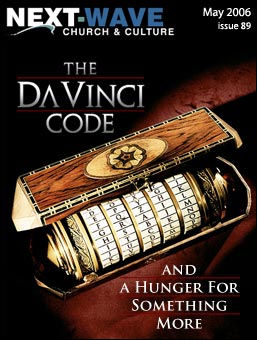
Conversation Questions for The Da Vinci Code
The following is a list of dialogue provoking questions put together by some of the staff of Search Ministries.
What are the some good questions to lead someone through a discussion on the Da Vinci Code material?
Ice breaker: What movie has had the greatest impact on your life?
A. What did you think? What did you like and not like? Did it raise
B. ?Why would we need to have a discussion about a fictional group?
a. Is there another work of fiction that people believed to be true?
b. Why is this book so popular? Why has this stuck such a nerve?
c. What is it about our culture that makes it more appealing today than in the 1930’s?
C. What are the consequences if the content is the book is true?
D. What are the consequences is the content in the book is false?
E. What do you think the main issues or themes of the movie were?
F. Is this the first time you’ve thought about these questions/issues?
G. How would it change your image of Jesus if he was married?
a. Would it matter if Jesus were married?
b. Why do we want Jesus to be single?
H. In the Last Supper, is it Mary?
I. How do recognize a conspiracy?
J. How does this affect you opinion of the church?
K. Have you read a fiction book that changed your life?
L. How did this impact of change your concept of:
a. …Truth
b. …History
c. …Scripture
d. …Jesus
M. Teebing said “All religion is fabrication” What do you think?
N. What is your understanding how the Bible came into existence?
O. If one wanted to know what Jesus really said and did, what would they need to do?
P. Do the winners really write history? Everything is open for discussion…there is no real truth behind it.
Q. Do you want Dan Brown’s book to be true?
R. Why do you think that our culture has a new thrust/genera of spiritual media? (Matrix, Passion)
- Suggested Resources for The Da Vinci Code
What are the some good questions to lead someone through a discussion on the Da Vinci Code material?
Ice breaker: What movie has had the greatest impact on your life?
A. What did you think? What did you like and not like? Did it raise
B. ?Why would we need to have a discussion about a fictional group?
a. Is there another work of fiction that people believed to be true?
b. Why is this book so popular? Why has this stuck such a nerve?
c. What is it about our culture that makes it more appealing today than in the 1930’s?
C. What are the consequences if the content is the book is true?
D. What are the consequences is the content in the book is false?
E. What do you think the main issues or themes of the movie were?
F. Is this the first time you’ve thought about these questions/issues?
G. How would it change your image of Jesus if he was married?
a. Would it matter if Jesus were married?
b. Why do we want Jesus to be single?
H. In the Last Supper, is it Mary?
I. How do recognize a conspiracy?
J. How does this affect you opinion of the church?
K. Have you read a fiction book that changed your life?
L. How did this impact of change your concept of:
a. …Truth
b. …History
c. …Scripture
d. …Jesus
M. Teebing said “All religion is fabrication” What do you think?
N. What is your understanding how the Bible came into existence?
O. If one wanted to know what Jesus really said and did, what would they need to do?
P. Do the winners really write history? Everything is open for discussion…there is no real truth behind it.
Q. Do you want Dan Brown’s book to be true?
R. Why do you think that our culture has a new thrust/genera of spiritual media? (Matrix, Passion)
- Suggested Resources for The Da Vinci Code
Monday, May 08, 2006
mike frost on Incarnational Christianity

I am thoroughly enjoying and being challenged by Mike Frost's talks on incarnational versus attractional Christianity that jordon cooper is uploading. Mike is Founding Director of Centre for Evangelism & Global Mission at Morling Theological College in Sydney, Australia and co-authored with Alan Hirsch the book The Shaping of Things to Come. When jordon is done, they'll be 5 talks avail.
Sunday, May 07, 2006
Saturday, May 06, 2006
Remembering Mark Palmer


Mark Palmer passed on Monday 27 March 2006. Charlie Wear gives us a heads up that yesterday - Friday 5 May 2006 - would have been Mark's 32nd birthday and points us to a wonderful post - Happy Birthday, my Love - by his wife Amy who is taking care of Mark's son, Micah, who's 4. Little Micah also lost his mom, Jennifer, to cancer in August 2003.
- Mark's last post on Sat 25 March.
- Amy's post on Mon 27 March
- Mark Riddle provides a brief summary of the challenges this family has faced and faces.
- Pictures from the Memorial Service
Mark touched a number of folks in his community, in the emerging church, and beyond, some of whom only got to know him after he began his battle with cancer. Here are some of their thoughts:
- Kevin Rains
- Alan Creech
- Andrew Jones
- Brother Maynard
- Charlie Wear
- Jason Clark
- Chris Marshall
Please email me the url if there is someone else's comments I should add to this list.
Mark wrote this before he passed:
"I guess what I really want to say is this: be hopeful. Don't stop fighting. On some level this thing is bigger than all of us. It's not about having a wife die of cancer at 26, and then 2 years later getting the same terminal illness. It's not about me and how I fight this disease or how our little family walks through it. The bigger picture is the battle against sickness and death that we all face because we live in a broken world. But it's even more about the Kingdom that has broken in and offers us a chance at relief from that disease. It offers health and victory where before there was none. There is hope in the midst of hopelessness. Death is not where we lose; the onset of hopelessness is the great defeater. So allow hope to rise up within you. And when it seems that hopefulness is the least appropriate response in this situation, let it rise up even more. Whisper your hope when you lie down at night; scream your hope when you wake in the morning. Live your hope as if it is the one and only thing that sustains you in this ravaged world. You will not be disappointed."
link
Send donations to the
Mark Palmer Memorial Fund
c/o The Landing Place Community
64 King Ave., Columbus, OH 43201
http://palmerlp.livejournal.com
Conrad Gempf on the Gospel of Judas
"To us, Gnosticism looks radical and mystical. Look again. They're not Beards running Linux, they're just Suits shoe-horning css into FrontPage. Gnostics are ancient intellectual elitists for whom the real gospel was too radical. "
from Part 1
- Part 2
- suggested resources on the Gospel of Judas
- suggested resources on The Da Vinci Code
from Part 1
- Part 2
- suggested resources on the Gospel of Judas
- suggested resources on The Da Vinci Code
Friday, May 05, 2006
Scot McKnight on Emergent and Doctrinal Statements
Scot expansively comments on the Emergent-sponsored LeRon Shults statement against Emergent having a statement of faith.
Scot also mentions the dialog between Shults and James KA Smith on the Generous Orthodoxy ThinkTank site.
Scot also mentions the dialog between Shults and James KA Smith on the Generous Orthodoxy ThinkTank site.
Early Christian Writings Resource
I'm giving a talk in a few days on the Gnostic Gospels and just found this great resource called Early Christian Writings - the creator is Peter Kirby. Mark Goodacre of NT Gateway comments:
"...very useful guide to Christian literature of the first two centuries, arranged chronologically. Sections on each writing or set of writings features links to on-line versions of the primary texts, links to secondary material and often some useful introductory material compiled by Kirby himself."
"...very useful guide to Christian literature of the first two centuries, arranged chronologically. Sections on each writing or set of writings features links to on-line versions of the primary texts, links to secondary material and often some useful introductory material compiled by Kirby himself."
Thursday, May 04, 2006
mclaren on hell and universalism
"No, I am not embracing a traditional universalist position, but I am trying to raise the question, When God created the universe, did he have two purposes in mind—one being to create some people who would forever enjoy blessing and mercy, and another to create a group who would forever suffer torment, torture, and punishment? What is our view of God? A God who plans torture? A God who has an essential, eternal quality of hatred? Is God love, or is God love and hate?"
- Leadership Journal Blog Link
Brian McLaren also extended his remarks in The Last Word and the Word After That in this interview by Leif Hansen.
- podcast - part 1
- podcast - part 2
- transcript of entire interview
- Leadership Journal Blog Link
Brian McLaren also extended his remarks in The Last Word and the Word After That in this interview by Leif Hansen.
- podcast - part 1
- podcast - part 2
- transcript of entire interview
Emergent Decides Not to Affirm a Statement of Faith
excerpts from Emergent's post by LeRon Shults:
Nevertheless, Shults notes
"This does not mean, as some critics will assume, that Emergent does not care about belief or that there is no role at all for propositions. Any good conversation includes propositions, but they should serve the process of inquiry rather than shut it down."
- link
- "Jesus did not have a "statement of faith."
- "The writers of the New Testament were not obsessed with finding a final set of propositions the assent to which marks off true believers."
- "The very idea of a "statement of faith" is mired in modernist assumptions and driven by modernist anxieties...."
- "...such an approach presupposes a (Platonic or Cartesian) representationalist view of language, which has been undermined in late modernity by a variety of disciplines across the social and physical sciences (e.g., sociolinguistics and paleo-biology)."
- "...this fixation with propositions can easily lead to the attempt to use the finite tool of language on an absolute Presence that transcends and embraces all finite reality."
- "...a 'statement of faith' tends to stop conversation."
Nevertheless, Shults notes
"This does not mean, as some critics will assume, that Emergent does not care about belief or that there is no role at all for propositions. Any good conversation includes propositions, but they should serve the process of inquiry rather than shut it down."
- link
Gene Edward Veith on the Gospel of Judas
No serious scholar, even of the most liberal variety, believes this text—which is dated nearly 200 years after the death of Christ—has any connection to the historical Jesus or the historical Judas. It would be as if an American in the 1950s wrote a book purporting to come from George Washington claiming that Benedict Arnold was really a double agent.
Gene Edward Veith pens an article on the Gospel of Judas.
- Suggested Resources on the Gospel of Judas
- Suggested Resources on the Da Vinci Code
Gene Edward Veith pens an article on the Gospel of Judas.
- Suggested Resources on the Gospel of Judas
- Suggested Resources on the Da Vinci Code
Wednesday, May 03, 2006
Kostenberger on The Da Vinci Code
"The Da Vinci Code will come and go (though first there will be the movie with Tom Hanks and millions more people being treated to the conspiracy theory of Jesus’ marriage with Mary Magdalene), but this liberal “myth of Christian origins” will persist. It will persist because it is part of this esoteric blend of New Age spirituality, neo-Gnosticism, feminist scholarship, an anti-supernaturalist, critical, post-Enlightenment stance toward Christianity, and a postmodern, subjectivist approach to history and truth."
Kostenberger on The Da Vinci Code
Kostenberger on The Da Vinci Code
Tuesday, May 02, 2006
New Section to Da Vinci Code Resources Post: Pastoral Approaches
I've added a section with recommendations for how to approach The Da Vinci Code phenomenon in the Suggested Da Vinci Code Resources post.
Zondervan buys Youth Specialties


- Zondervan Press Release
- Youth Specialties Press Release
- Blogpost from Mark Oestreicher who is the President of Youth Specialties
We have HUGE news! Our longtime publishing partners and friends at Zondervan have purchased Youth Specialties. While you pick your jaw up off the floor, let me back up for a moment...
Youth Specialties was founded by Mike Yaconelli and Wayne Rice in the late 1960s, with a passion to train, encourage and provide resources for Christian youth workers. After a couple years of selling their "Ideas" books out of the trunks of their cars, the publisher of Zondervan came to them and said, "We love what you guys are doing. Let us help you get these resources out to youth workers all over North America." Thus began our more than 30-year friendship with the world's largest Christian communications company.
Over the years, many things have changed in the church and in both companies. But both have stayed true to their mission and to the church we love so deeply. Zondervan talked to Mike and Karla Yaconelli about buying YS several years back, but the timing just wasn't right. The timing is perfect now.
Youth Specialties is a funky and small rag-tag group of youth workers who want to serve other youth workers. And we've always been as unstable as a middle school girl. One really bad move (and we make bad moves all the time!) could finish us off, and end our ability to serve you. So this gives us quite a bit more strength and stability?not to mention opportunity to expand what we're doing. This partnership?and our entire reason for wanting it?is so that we can serve youth workers better. This will allow us to take more risks, try more new things, grow and evolve.
If any other company were buying YS I would be extremely nervous. But we know the peeps at Zondervan, and they know us. I count many of their staff as close friends, as do most of our staff at YS. I'm tellin' ya?this whole thing is a love-fest!
Here's the big elephant-in-the-room question you're likely thinking at this moment: will YS change? Well, on one hand: I hope so! YS has always been committed to change. And we can never continue to fulfill our mission to bring change to the church unless we are changing ourselves. But here's what won't change: our mission, our culture, our vision and values, and our commitment to providing you with the best resources, training, encouragement and challenge. Zondervan is 100% committed to us staying who we are. We'll keep our offices here in San Diego, and our staff isn't experiencing any major changes?except Karla Yaconelli, who will no longer be our owner, but will be actively involved in a consulting role with us (in fact, Karla's office will remain next to mine, so she can bug me anytime she pleases!). You'll be hearing from Karla in the days to come also.
We're pretty pumped about this whole thing because, at the end of the day, Zondervan will help us keep doing what we live for: loving youth workers and the kids they serve.
Monday, May 01, 2006
Another Scholar-Blogger

Andreas J. Köstenberger, who is Professor of New Testament at Southeastern Baptist Theological Seminary, has begun blogging.
Kostenberger joins Scot McKnight and Ben Witherington as NT Scholars who blog. While trolling for other Scholar Bloggers I ran across this helpful list.