there's the red and blue map and then there's the red and blue map
Many have by now seen the famous USA TODAY map that shows red counties for Bush and blue counties for Kerry.
This map, courtesy of The Geomblog adjusts the size of each county based on population and gives a truer picture of the populace's presidential preference (thanks to Conrad Gempf for the heads up) .

And while I seem to be in the minority as an emerging blogger who voted for Bush (is it just Rudy and me?), but I think it's important that those who voted for the Republican candidate avoid an unwarranted triumphalism. This map serves that belief.
Tuesday, November 09, 2004

Monday, November 08, 2004
New Next Wave Interview with Brian McLaren
Next Wave interviews Brian ab his new book Generous Orthodoxy.
Sunday, November 07, 2004
New Modalities of Spiritual Community
Every few decades, a new medium finds its niche in American politics. In the 1920s and 1930s, it was radio that gave candidates a way to talk directly to large audiences. In the 1950s and 1960s, it was television, which created sound bites and showed that a candidate's physical image matters. The 1980s and early 1990s were about cable TV and targeting audiences such as the MTV generation.
This year, the Internet came into its own as a political tool.
Tricia Bishop, who reports on the Baltimore Sun's Technology Beat, wrote a nice piece published today headlined Internet finds its niche in politics.
A number of us have found spiritual community online. I feel that I have been blessed with a wonderful community of about 270 folks who have been discussing "navigating theology, praxis, and leadership in the emerging church" since May of 2001 in the online faithmaps discussion group. (They call themselves the 'mappers.) This group arose out of faithmaps.org, which I had launched shortly before the birth of our group.
I had originally bought the domain name for Cedar Ridge Community Church when I was on staff there running small groups and their Learning for Life Adult Ed initiative. I had intended to use the site to support one theology workshop I had taught there. After I left staff, I bought the domain name from the church and started developing faithmaps.org in earnest (it desperately needs a redesign and I'm working on that now!) and the 'mapper discussion group.
It has become clear that a number of folks in our online community have found connections there that they were challenged to find in their geographically local communities. I've blogged a bit more detail ab this elsewhere, but there are a couple of features about online community that make it unique:
- the initial anonymity that's possible online leads some to be more intimate earlier in the arc of their relationships than they would in facetime relationship. This is fueled by the significant optionality of online relationships; if you don't like me, it's fairly easy for you to make me go away.
- another significant feature is the comparative ease of finding people of like mind because of the relative ubiquity (at least in the First World West) of the Internet. It's easier to find resonances with folks online than it was for folks in , say, 1920's southern Georgia.
A few of us have also explored ways in which blogging (see Do Blogs Democratise Knowledge, parts one and two) can be usefully explored as a way of developing a new praxis of theological development.
I think it's important that we avoid triumphalism when it comes to touting online community. Just as the advent of the radio, the television, and the telephone did not completely revolutionize spiritual community, the Internet will not solve all of our ills; it most certainly is not the answer to challenges of spiritual community. Nevertheless, at the same time, just as American politicos are exploring ways to use the web more effectively on behalf of their candidates, so also the church would do well to explore whether she is fully optimizing what new relational opportunities are afforded her via the web without viewing it as a panacea.
Saturday, November 06, 2004
Radical Orthodoxy and other Christian Interactions with Postmodern Thought
With the coming publication of James K. A. Smith's new book Introducing Radical Orthodoxy: Mapping a Post-Secular Theology, the 'mappers have begun discussing Radical Orthodoxy.
Chris Criminger made some comments there that I thought warranted wider distribution:
"Radical Orthodoxy proposes a postmodern project while not fully suscribing to it. Some of its leaders are John Milbank, Catherine Pickstock, and Graham Ward. They are a movement that critiques modernity rationalism and postmodern relativism. They have tried to go back to tradition recognizing the limits of knowledge; they have tried to reinterpret the Christian faith with postmodern assumptions while placing theology over philosophy and culture. Here are some of its strengths and weaknesses from my perspective.
1. There are some things I love about Radical Orthodoxy but I have come to grow leery of it from some of its weaknesses which I will list below. One great strength of RO is that it is postmodern friendly without buying into the whole postmodernism program. It rightly proposes a non-violent Christian ethic and holds up the masternarrative of the gospel story (despite some postmoderns fears of the metanarrative). Like other postmodern theologies, RO is very 'justice' oriented as it seeks justice and liberty for all.
2. Although I was as originally enamored with Radical Orthodoxy as I was with postmodern Christian theology, I have become skeptical of both for similar reasons. RO rightly returns to appropriating the early church tradition but it does it in its own pick and choose way that has a way of missing the mind of the fathers and some of the original teachings of the early Christians like atonement theology; creative imagination too often takes the place of historical retrieval of the tradition. RO has the same problem of some postmodern Christian approaches of obscuring the role of Scripture, creed, and the proper place of ecclesiology in the theological discussion. (Too often, academic discourse trumps ecclesial practices and discipline. Christian theology is best done within the cradle of the church and not the academy despite some good refinements the academy compliments and brings to the church at times). There is also an underlying assumption within postmodern thought and Radical Orthodoxy whereas both too easily allow personal autonomy to come into conflict with traditional patterns of ecclesial (church) practices of obedience. There are such divided loyalties at times, one wonders whether allegiances to postmodernity overshadows their commitment to God's church (or Christian faith) rather than the other way around? In other words, in the realm of many postmodern approaches and Radical Orthodoxies (I can hear the teeth gnashing on this one), intellectual virtuosity easily eclipses ecclesial obedience. Therefore theology becomes creative and inventive (and thus "radical") rather than receptive and reiterative. If one listens very long to many RO's and postmodern Christians, you will hear their alienation and separation from the church. You will hear ad nauseum their ”progressive," moral, intellectual, social and political thoughts and the constraints of classical Christianity and why they don't like conservative theology anymore (especially if they have been burned by conservative churches and/or conservative Christians).
Now I will say there can be some faithful Christians who are both RO and postmodern (sheesh, I was one of them!). But what I am learning from church history and from my own journey of faith is RO's and postmoderns too easily are tempted to go the *correlation* route (which some of the early church fathers did but without the checks and balances of apostolic tradition 9creeds and ancient liturgy] and the church [the incarnate Christ in his "body" of disciples]). What I mean by "correlation" - what I am learning from church history and the fathers - is the synthesizing of the language of the culture with Christian content for the mission of the church. For postmoderns who are faithfully doing this, I applaud them but so much of the emerging church movement I think has lost both substance and its historical rootedness of Christianity. RO and postmodern Christians too often have what I call a "canon within a canon” approach to the Scriptures and a very highly selective approach to the early church tradition (if they aren't simply ignoring it altogether!). The other missing piece of the puzzle from church history that brings history and faith, the literal and metaphoric, the ancient and the contemporary together as correlationism must be balanced with the "Orthodox model" of affirming apostolic teaching and tradition. Even though one pomo writer uses the term "generous orthodoxy," it does seem among many pomo writers that there is a complete break with and disdain for anything that is orthodox or classical in the Christian sense of the terms. As Evangelicals, whether they cheer or condemn postmodern thought, it seems that Evangelicalism falls into the same trap where intellectual respectability and pragmatism controls so much of the movement today. "
R R Reno, Associate Professor of Theology at Creighton University, sounds some similar notes in his First Things article "The Radical Orthodoxy Project."
Positively he comments,
"One of the tragedies of modern theology has been its systematic renunciation of this ambition. The deep end of "truth" has been ceded to science, while theology swims in the shallow end of "meaning." Aesthetic expression has been relinquished to the cult of original self–expression and "what–it–means–for–me." Morality becomes a subset of utility, or a creation of private conscience, and Christians are reduced to "sharing their values." An impoverished realm of "spirituality" or "transcendence" remains the rightful property of Christian reflection, and running on these slight fumes, theology drives toward relevance in a world over which it has renounced its authority. Radical Orthodoxy is nothing if not intensely opposed to this renunciation; for its adherents the whole world is fit for absorption into a theological framework. Christian theology should shape the way we talk about everything.
Scope, however, is not the only Augustinian ambition lost in modern theology. For every metaphysical, historical, and anthropological adventure of speculation, Augustine devoted even more energy to affirming and defending the irreducible particularity of divine redemption in Christ. The scope may be wide, but the center is focused, and the pull of the gravity of Christ is profoundly strong. The world is participatory, true enough, but its participatory framework is Christ–formed. The proponents of Radical Orthodoxy embrace the universal scope of Augustinian ambition—how Christ’s redemptive purpose structures the natural world, history, human desire, and truth itself."
But Professor Reno goes on to detail concerns similar to Criminger's beginning with the comment
"Like so many modern theologians, however, they often express a deep ambivalence about its concrete particularity and the authority it exerts over the Christian life."
For those interested in tracking some in the church's (particular some in the emerging church) efforts to correlate Christian theology and praxis with postmodern impulses, there are a number of interesting books coming down the pike:
- Of course, Smith's Introducing Radical Orthodoxy: Mapping a Post-Secular Theology mentioned above and
- Carl Raschke's new book The Next Reformation: Why Evangelicals Must Embrace Postmodernity,
and a couple that will likely be more negatively critical,
- Reclaiming the Center, edited by Millard J. Erickson, Paul Kjoss Helseth and Justin Taylor. (You can read chapter one of this book here), and
- D A Carson's Becoming Conversant with Emergent, based on a series of talks Professor Carson gave to Cedarville College which are available for purchase now here. Some, such as Andrew Jones and Dr. David R Mills have already responded to Carson's talks.
Friday, November 05, 2004
non-binary hope
kudos to andrew jones for his hopeful comments about Bush's second term. I sort of liked that I couldn't tell from reading his post if before the election he was pro-kerry or pro-bush. jason smith was also complimentary, nominating jones as the new voice of evangelicalism. and I don't sense it was just because jones could be interpreted as being pro-Republican; perhaps there was something deeper in what he said. be sure to read the comments to his blog (including his own elaborations); they are also an education.
i've seen some very virulent anti-Bush emerging bloggers out there. it's my suspicion that Kerry was not a saint and that Bush was not the devil and visa versa.
maybe our biggest mistake is when we absolutize others?
Thursday, November 04, 2004
Andrew Jones Lost His Brother
We found out today that my little brother Lewis died in Sydney, Australia, 2 days ago. He was 34 years old.
Please pray for Andrew and his family.
A Participitative Spirituality: Renewal thru Blogging
Puff talk? Tim Bednar, of e-church.com, doesn't think so.
We are a generation of Internet users (not distinguished by age) who view themselves as participants, not consumers. It's important for pastors to note this transformation from a passive to a participatory congregation. Millions of us do not want pastors to be gatekeepers; but we need pastors who foster spiritual formation by co-creating the church with us. Bloggers represent the tip of this transformation. Internet users are experiencing the networked church and it is changing them. Soon, we will bring these themes into our local church. I believe this will be the beginning of a grassroots revival not unlike the Charismatic/Pentecostal renewal of the early twentieth century.
Rob Moll interviews Bednar in a recent Leadership Journal article.
Bednar's comments reminded of some inter-blog conversation a few of us had recently on the role of blogging and a new praxy of theologizing:
do blogs democratise knowledge?
part one
part two
Wednesday, November 03, 2004
Abductive Columns Announces Blog Reviews
Fred Peatross announces his intention to post occasional blog reviews.
Tuesday, November 02, 2004
Still Can't Decide?
Beth just told me ab PresidentMatch, where you take a test and - bingo - it tells you for whom to vote! Sponsored by AOL and Time. I tested 49% Bush; 49% Kerry!
Why You Should Vote for Me Today
Today we ran two articles written by the candidates on one full page where George Bush and
John Kerry answer this question.
RealLiveInterview
Christianity Today interviews Gordon Atkinson, the RealLivePreacher. Be sure to also read CT's review of Gordon's new book.
Monday, November 01, 2004
For Whom Do I Vote?
Vote-Smart is a great place to go to get non-partisan information for your candidates. Just put in your zip+4 (and they have a link to the US Post Office's site if you don't know). You might also check out the League of Women Voter's DemocracyNet.
If you're still undecided ab the Presidential Election, check out this great page NPR offers. MSNBC also has a similar page as does CNN.
The Nexus of Emerging Church and the Traditions of Calvinism
One of the most interesting phenomena within the emerging church movement has been the participation of individuals from the Calvinist traditions (this has occurred in roughly the same time as a similarly interesting confluence of Calvinist and Charismatic traditions seen in such groups as the Sovereign Grace Ministries). One of the the most well-known churches in the Calvinist/Emerging Church space has been Mars Hill Church in Seattle which is pastored by Mark Driscoll. Mark is also associated with the Acts 29 Network (which, according to Driscoll, has started over 100 churches in the last 5 years). Another significant collection of sites in this space has been those maintained by Rob Schlapfer including:
Christian Counterculture,
Discerning Reader (a bookstore) and
Antithesis, (though this site is now shut down with a single provocative quote by Rob: "antithesis is shut down - perhaps for good. I've just lost hope.")
Mars Hill Church's Mark Driscoll has recently written a book called Radical Reformission. The latest issue of Christian Counterculture has a Driscoll article based on the book. The article includes a fascinating early look at the beginning of Leadership Network's Young Leaders Network which can be considered the institutional predecessor of Emergent in the Emerging Church space.
Rob Schlapfer recently posted an interesting editorial piece on the Christian Counterculture site called Christians Before a Watching World: The Dangerous Pursuit of Reformed Theology.
He begins his piece with :
Why is it that, with all too many of us, the more familiar we are with sound Christian teaching the less Christ-like we become in our daily lives? Why are so many "Reformed" believers in particular, so lacking in love, kindness, patience, gentelness, meekness -- the fruti fo the Spirit's work with us? Why so cold -- abstrating truth from the real world of people with needs? Is there a danger pursuing theology -- especially, in our times, Reformed Theology?
Yes. There is a very real danger.
Schlapfer concludes his brief piece with
Don't misunderstand me. I am grateful that I was introduced to the riches of Reformed Theology some twenty years ago. But the study of such theology is not an end in and of itself. It is always to make us mroe like Jesus....
I suggest that Schlapfer hits some helpful notes that speak to how the Emerging Church and the Calvinist traditions can be helpfully synergistic.
One of the critiques some emergers have about evangelicalism is that it's addicted to the proposition - that it views information transfer as what we've called elsewhere the omnicompetent modality of spiritual transformation. Many of us in the emerging church conversation believe that a more holistic approach to spiritual change is necessary - one that does not exalts information transfer as the exclusive means of spiritual change. This is an emerging church thoughtthread that serves the Calvinist tradition and Schlapfer's concerns.
With such an emphasis, however, it might be understandable if the church emergent were to swing too far into the opposite direction. One might see the emerging church depreciating biblical information in the process of overreacting to a perceived imbalance. This is a common phenomenon in philosophical thought. In his Philosophy and the Christian Faith, Colin Brown, who at that time was Dean of Studies at Trinity College in Bristol, England, noted:
At almost regular intervals down the centuries someone will hit upon an idea which has some claim to truth. It is then blown up into a system which is thought to be capable of explaining everything. It is hailed as a key to unlock every door….In each case the thinkers concerned were so impressed with their particular insight that they built it into a more or less rigid system which virtually destroyed its original usefulness.…if anything is to be learnt form the history of philosophy, we should be cautious in embracing one set of philosophical ideas to the exclusion of all others, and critical in our evaluation of all of them. Just as no single human being has exhaustive knowledge of the whole of reality, but may have partial and valid insights into this or that field of experience, so no philosophy is all embracing. Its insights and methods are often tentative and provisional. It may have a valid apprehension of this or that. Its methods may be fruitful in exploring certain particular fields. But if we are wise, we shall be on our guard against definitive systems and allegedly omnipotent methods of approach.
Those of us in the emerging church do well not to quickly cast aside the theological spadework of those who've preceeded us, including the many sincere and brilliant theologians of the Calvinist traditions. While eschewing proposition addiction, we musn't overreact by avoiding the necessary proposition. Balance is the watchword.
Another way in which the Calvinist tradition might profit from the emerging church ethos is from the emphasis of some in the emerging church on the core essentials of the Christian faith while exercising tolerance in regards to non-essentials. This, of course, is an ancient sentiment - going back to Augustine:
"In essentials, unity;
in non-essentials, liberty;
in all things, love."
Such an emphasis is not without precedent in the Calvinist traditions.
It's said that an enthusiastic follower of the Calvinist George Whitfield asked him if they would see the Arminian Wesley in heaven. Whitfield said no:
“No, he will be so near the throne, and we at such a distance, that we shall hardly get a glimpse of him.”
More recently, the Evangelical Presbyterian Church, a denomination of about 190 churches that began in 1980, sees just such a sentiment as one of its core distinctives. On their official website, in answer to he question "What is unique about the EPC?" the denomination answers:
We are unique among American Presbyterians with our self-conscious attempt to balance essential and non-essential matters within a confessional heritage. We are unified in our commitment to the essentials of the historic Christian faith taught in the Bible, but allow liberty of conscience on those matters which are not so plain in or central to the Bible’s teaching.
And Warehouse242, an emerging church in the Charlotte area, is part of the EPC.
It will be interesting to see how these traditions interplay in days to come.
It would be a beautiful thing if the emerging church conversation becomes not a cause for division in broader evangelicalism, but rather a conversation that seasons the entire movement. We believe such a consequence is possible.
Sunday, October 31, 2004
For Halloween
(and, ironically to this post, my birthday):
I give you ... The Death Clock
Thanks for Fred Peatross for the link.
Saturday, October 30, 2004
organizational excellence and spiritual life in community
Darryl Dash quotes Bill Easum who writes:
Managerial and professional types take their cues from the last fifty years of modernity and function more like CEO's or COO's than transformational leaders. They take great care in running the church, managing the organization, often to the point of micromanaging the church.
Procedure and proper theology occupy most of their attention. Pastors place great emphasis on their education and official role as the ordained leader of the church. Laity enjoy playing the church game - sitting on committees and applying Robert's Rules of Order...
At their best, managerial and professionals are spiritual infants [sic]; at their worst, they are controlling Pharisees or little more than career-oriented ladder climbers...I have not seen any leadership capacity in the church served well by this style. It is one of the most destructive forms of leadership in the church today...
If you fall into this category, do yourself and the kingdom a favor and either grow up spiritually, find another profession, or get out of the church.
I respect Bill Easum and I agree with his statement when his comments are read iconoclastically - in the same way Jesus should be read when he advocates the hatred of our parents.
It is a tragic thing when any leader - in church, non-profits, or business - believes that the highest expression of themselves comes from integrating themselves into an organization, executing well-run meetings, building a profitable organization, running a project well, successfully mediating a conflict, or displaying good leadership skills. It would be similarly tragic if any pastor believed that they led a vibrant spiritual community because the air control system of the building was first rate, the paint was new, and the architecture was postmodern. There is a dynamic to spiritual life that is uncaptured by any of these organizational or building features!
My concern would be with any who would take Bill's statements literally - that a pastor who also happens to be an outstanding manager must thereby be "a spiritual infant." I would respectfully disagree with those who would cast managerial excellence as intrinsically antithetical to dynamic spiritual leadership. I would suggest that would be the same as comparing apples and dictionaries. Being an outstanding manager or director or organizational leader does not necessarily translate into spiritual leadership. But we suggest it doesn't work against spiritual leadership.
If I must have only one, I'll take the apples. If I must have only one, I will take dynamic spiritual leadership.
(However, those who might take Bill's words literally might also be thinking of the formerly ascendant managerial paradigm where profit was the sole determinative criterion of action and organizations were set up in strict hierachical fashion. Further, it may be that some pastors style themselves after this mode of operation. But this type of managerial style has not been in vogue for about two decades (e.g. Jim Collins' assertion that the finest companies in the United States do not see profit as their primary motivation).
But we can, in fact, have both spiritual life in community that expresses itself missionally and organizational excellence . But - at the same time - we must never confuse organizational excellence with real spiritual life or see one as leading to the other. Modernity might lead those in the church to believe a program of dotting all the organizational i's and crossing all the organizational t's will ineluctably lead to spiritual effectiveness, but this is a hopeful fiction. Organizational excellence is mere context. Fine organizational structure and procedure is an elegant expression of efficiency. It is not spiritual impact or spiritual growth itself.
Now - having said that - in real life we can't really dichotomize these two elements. In healthy spiritual community the dual threads of spiritual life and organizational excellence can interplay in a dance of spiritual effectiveness. Max Depree, for example, eloquently writes about how organizational excellence can coincide with real human community. And we've explored elsewhere a bit more about about how a spiritual dynamic operates within such a context.
We suggest that the two must not be confused and that neither need be discarded.
Friday, October 29, 2004
"Meet the New Boss. Same as the Old Boss" ?
The Who
As the Emergent Church Conversation stands at the intersection of grass-roots and institutionalization (with such classic movement signs as stars, books, conventions, magazines, etc), Chris Erdman laments the seemingly increasing antipathy between some traditional and neotraditional elements and some emerging church folks.
Thursday, October 28, 2004
Top Emerging Church Blogs
Results of my earlier question:
Andrew Jones
Jonny Baker
Resonate Soapbox (jordon cooper et al)
Church Marketing Sucks
Len Hjalmarson
Todd Hunter
more to come from my other questions and feel free to post more top blogs in all three categories (including emerging church blogs) here.
(thanks to those of you who mentioned emergesque which I won't list for modesty's sake!)
Wednesday, October 27, 2004
church and culture
NT scholar conrad gempf, author fred peatross, and author rex miller are having an interesting conversation about church and culture over on conrad's blog. be sure to see the comments.
Tuesday, October 26, 2004
A New Mode of Theological/Ecclesial/Praxis Discussion
To an earlier post, Rex Miller commented:
The blog world is becoming a fountain for the new theology of the church. Pastors better start keeping a file on this dialogue.
Rex, you're right! Earlier a number of us had a discussion about this where we explored the legitimacy, limits, and benefits of this phenomenon. See
Do Blogs Democratise Knowledge - Part 1 & Part 2
Christianity Today purchased by Emergent
Ok, not really. But, again, CT posts another article on the Emerging Church entitled Emergent Evangelism by Brian McLaren and Duane Liftin.
Monday, October 25, 2004
Is There Still a Scandal?
Ten years ago, Mark Noll - Professor of History at Wheaton College - wrote The Scandal of the Evangelical Mind that began with the now famous quote, ""The scandal of the evangelical mind is that there is not much of an evangelical mind."
The book had an enormous influence. Ted Olsen, Online Managing Editor for Christianity Today, writes that the book "has arguably shaped the evangelical world (or at least its institutions) more than any other book published in the last decade."
He also lets us know that in the most recent issue of First Things, Noll comments on the current state of intellectual evangelicalism:
Ten years after the publication of The Scandal of the Evangelical Mind, I remain largely unrepentant about the book’s historical arguments, its assessment of evangelical strengths and weaknesses, and its indictment of evangelical intellectual efforts, though I have changed my mind on a few matters.
Noll continues,
Taken together, American evangelicals display many virtues and do many things well, but built-in barriers to careful and constructive thinking remain substantial.
These barriers include an immediatism that insists on action, decision, and even perfection right now, a populism that confuses winning supporters with mastering actually existing situations, an anti-traditionalism that privileges one’s own current judgments on biblical, theological, and ethical issues (however hastily formed) over insight from the past (however hard won and carefully stated), and a nearly gnostic dualism that rushes to spiritualize all manner of bodily, terrestrial, physical, and material realities (despite the origin and providential maintenance of these realities in God). In addition, we evangelicals as a rule still prefer to put our money into programs offering immediate results, whether evangelistic or humanitarian, instead of into institutions promoting intellectual development over the long term.
Yet Noll notes,
That being said, it must also be noted that were I to attempt such a book as The Scandal of the Evangelical Mind today, it would have a different tone—more hopeful than despairing, more attuned to possibilities than to problems, more concerned with theological resources than theological deficiencies.
The basis for Noll's hope, he suggests, is our becoming more radically Christocentric.
But how will evangelicals pursue goals defined by phrases like "first-rate Christian scholarship" or "the Christian use of the mind," when these phrases sound like a call to backsliding for some in the churches and like a simple oxymoron for many in the broader world? For a Christian in the evangelical tradition, the only enduring answer must come from considering Jesus Christ as sustaining the world and all that is in it. In the light of Christ, we can undertake a whole-hearted, unabashed, and unembarrassed effort to understand this world. In a mind fixed on him, there is intrinsic hope for the development of intellectual seriousness, intellectual integrity, and intellectual gravity.
Without apology, Noll also states in the article that evangelicals tend to favor the nouveau and eschew - to their own detriment - the riches of tradition. When he speaks of "tradition", he does not mean empty formalities evacuated of their meaning, but rather that which thousands of minds have reflected on for hundreds of years. When he speaks of listening to tradition, he means listening to the Church in all her time.
Noll goes on to detail what specifically encourages him in an article well worth reading.
I continue to be concerned that such an enthusiasm for the mind might still yet lead to a stultified intellectualism when it's combined with a belief that spiritual transformation occurs primarily through information transfer. I've argued elsewhere, rather, that the transpropositional is a non-negotiable for spiritual change. I've tried in another place to give some idea of how a lack of the transpropositional can not only lead to non-holistic theologizing but also to incorrect theologizing through the inability to prioritize. (In the referenced article, see the section that speaks about neurologist Antonio Damasio).
But I'm certain that Noll has identified the corrective (while perhaps not teasing it out as much as we would like) that will achieve both propositional and transpropositional balance and true and holistic intellectual depth: a radical focus on Jesus Christ - a focus that's passionate, attentive, committed and awake. This focus only comes when we abide in Him in a way that reflects all the Johannine riches of that phrase.
wrapping the brain around the millennium matrix
rex miller has been busy giving interviews! see the articles section of his site.
Google Desktop
An addition note to my earlier post enthusing ab Google's new powerful Desktop Search tool. Some have observed that one needs to take care using it on machines shared by others. For examples, if you use a multi-user box to send a forgotten password to yourself via email, might be available to someone else using the same box.
And I've observed that the tool does reveal a couple of lines of content when I search for terms I have used in password-protected Word docs.
But if you're the only user of your PC, no worries.
Sunday, October 24, 2004
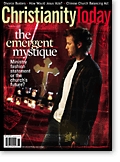
The Emergent Mystique
Brian McLaren is not particularly young. He was born in 1956 and he doesn't have cool hair, if only because he has very little hair at all. With his blue-jeans-and-Birkenstocks dress code and a middle-age paunch, he looks like a suburban, nondenominational pastor who came of age playing the guitar for youth ministry meetings in the 1970s.
Which is exactly what he is. Yet he is also the de facto spiritual leader for the emerging church, thanks to his indefatigable speaking and writing schedule that produced, among his many books, 2001's A New Kind of Christian.
"Life in the church had become so small," Kristen says. "It had worked for me for a long time. Then it stopped working." The Bells started questioning their assumptions about the Bible itself?"discovering the Bible as a human product," as Rob puts it, rather than the product of divine fiat. "The Bible is still in the center for us," Rob says, "but it's a different kind of center. We want to embrace mystery, rather than conquer it."
"I grew up thinking that we've figured out the Bible," Kristen says, "that we knew what it means. Now I have no idea what most of it means. And yet I feel like life is big again?like life used to be black and white, and now it's in color."
The more I talk with the Bells, the more aware I am that they are telling me a conversion narrative?not a story of salvation in the strict sense, but of having been delivered from a small life into a big life. The Bells, who flourished at evangelical institutions from Wheaton to Fuller Theological Seminary to Grand Rapids's Calvary Church before starting Mars Hill, were by their own account happy and successful young evangelicals.
Andy Crouch writes a significant lead article in a recent issue of Christianity Today that seeks to analyze the Emergent Conversation in the midst of our current culture.
Also be sure to note the several links at the bottom of the article. 
Saturday, October 23, 2004
accepting the third dimension: the grace of not absolutizing others
On Friday, I started watching Dick and Kofman's 2002 documentary Derrida. As we noted about two weeks ago, Jacques Derrida died on Friday 8 October. In my earlier post, I also linked to some introductory articles ab Derrida for those who wish to explore the nexus of his thought and the emerging church.
I found Dick and Kofman's Derrida to be a delightful introduction to the man and his thought. It was fun to watch how the creators playfully applied a post-structuralized approach to capturing the man himself. The documentary is an interplay of interview, video of Derrida speaking to students, in his home, with intermittent readings from some of his works. By seeing this admittedly artificial (Derrida frequently comments on this) portrayal of the man, one nevertheless gets a better sense of his gestalt than one might get just from reading his works.
One comment struck me:
"We look in a mirror and see ourselves and have a reasonably accurate sense of what we look like" (translated in subtitles from the French).
A two-dimensional interpretation of Derrida, of course, doesn't allow him to speak such a sentence. It makes him sound too much like a critical realist. It makes him sound as if he might actually believe in some sort of truth. Derrida, of course, did believe in something. I do not mean to sacralize the man or his thinking, but - while eschewing certainty - Derrida did have beliefs. In his 14 October NY Times essay, Mark C. Taylor, Cluett Professor of Humanities at Williams College who knew Derrida, wrote:
To his critics, Mr. Derrida appeared to be a pernicious nihilist who threatened the very foundation of Western society and culture. By insisting that truth and absolute value cannot be known with certainty, his detractors argue, he undercut the very possibility of moral judgment. To follow Mr. Derrida, they maintain, is to start down the slippery slope of skepticism and relativism that inevitably leaves us powerless to act responsibly.
This is an important criticism that requires a careful response. Like Kant, Kierkegaard and Nietzsche, Mr. Derrida does argue that transparent truth and absolute values elude our grasp. This does not mean, however, that we must forsake the cognitive categories and moral principles without which we cannot live: equality and justice, generosity and friendship.
And, it seems, he did believe that through the senses one can roughly apprehend reality. I'm not even sure Derrida was ontologically capable of denying our capacity to apprehend reality - even moral reality - to some reliable degree. He had been expelled from his Jewish school while living in Algeria after the Nazi defeat of France and spoke of what it was like to be called derisive names during that time.
We have a great capacity to inordinately collapse others to a flat two-dimensionality. I simplify the thoughts and actions of others. We do it to Derrida. We do it to one another.
For some time now I've been teaching, training, consulting in the areas of conflict resolution and helping people of divergent orientation and opinions work in team. I also have had opportunity to do some mediation. Three years ago, I wrote this in a series of articles Next-Wave published on postmodernism and the church:
I’ve observed that when individuals are embroiled in the heat of dispute, they have a tendency to absolutize - even demonize - the opposite party. "Absolutizing" is a term I use for arbitrarily narrowing the person with whom you’re disagreeing to their position. It involves a simplification of the other’s position - and ultimately of the other person - so that the issue is viewed as what I call "relentlessly binary." It’s black or white, on or off, 0 or 1, right or wrong.
Demonization occurs when the other’s motives are negatively construed. This narrowing of the other person results from several factors. One is the need to create a paradigm to handle controversy. In the short run, it is more simple and convenient to cast as adversary those with whom we disagree. The dispute becomes black and white and our role is well-defined and well-rehearsed. We marshal arguments supporting our thesis and our "opponent" can feel thusly cornered into doing the same.
Skillful conflict mediators aid those locked in the death-grip of thesis-antithesis by aiding each party to
1 - listen and fully focus on the other; and
2 - gain a fuller understanding not only of the reasons for the other’s position but - most importantly - of the presuppositions behind those reasons.
When this is done properly, the end of the process brings two results:
1 - the revealed complexity of concerns on both sides often shatters the myth of black and white, thesis-antithesis that had devolved the issue into mere power struggle and
2 - ironically, this very complexity provides a rich tapestry of creative alternatives as to how the "conflict" - or seeming incompatibility of positions - can be resolved.
The original precipitating conflict is sometimes shown to be hopelessly simplistic in its two-dimensionality. Resolving the conflict is now revealed to require the much harder work of addressing all the concerns represented in each disputant’s presuppositions.
Similarly, Chris Criminger, one of the 'mappers who's an articulate and informed pastor in Indiana and who's written a review of Groothius' stringent critique of postmodernism called Truth Decay, recently made this comment in our online community:
When you say you once were postmodern, I suspect you identify that with some cultural phenomena. I can't help but wonder if some folks have been reading books like "The Death of Truth" or "Truth Decay." The bottom line is they often connect intellectual continental philosophy like postmodernism to relativism and all truth is mere opinion. These academic Evangelicals therefore see the opinion only approach by many college students and then logically conclude that they must of got their relativistic philosophies from somewhere------it must have been postmodernism. Forgot the fact that college students back in the sixties were thinking and saying similar things when postmodernism was not even hardly a word much less a concept understood by the world at large.
Actually, it is fascinating when people 'actually' read people like Lyotard, Focault, Levinas, and Derrida and company, that they often neither reject modernity whole-sale like some postmoderns do today nor do they completely abandon truth or meta-narratives. It's interesting how the metanarrative of "justice" still is the reigning paradigm among many postmoderns despite their concerns and suspicions about meta-narratives.
In the end, I think Christians need to quit talking at other people (a very modern thing to do) and start listening to what postmoderns say themselves. I wish Christians would take other people at their word and what they believe than taking some supposed extreme conclusions of what's supposed to be the logical conclusions of someone's positions (hey, you postmoderns can't believe in truth or believe some things are wrong, everyone knows you all believe everything and everyone is right and there is no such thing as truth but simply people's socially constructed words, blah, blah, blah). Actually, it's these kinds of modern polemics that keeps driving postmoderns further away and even some of them into extreme places that modern Christians then find quite embarrassng. It's like Christians shoot their wounded and then say, "Why are you laying on the ground?" The church needs to do a much better job of understanding postmodern culture and loving postmodern people.
I also wish postmoderns would look really hard and see if they also are not contributing to some of the polemics and divisions between moderns and postmoderns. Its almost like at times that moderns are the victimizers and postmoderns are the victims and therefore they cannot ever be the problem or create their own dichotomies (we're into "holism" except for those evil-mongering modern Christians, yada, yada, yada . . ."). Or I can't stand conservative Christianity but I am into "inclusivity" [sigh].
All I will say is if postmodern Christianity just mirrors another schism in the church between traditional and emergent, modern and postmodern, foundationalism and nonfoundational epistemologies, etc. then I don't find the future near as promising or hopeful as some postmoderns seem to suggest.
Here is my simple proposal . . . Christians quit defending and start serving . . . Quit pointing the fingers and take a good look in the mirror and see how crucified we really are to our own pride, pretensions, and control of power. Now this last thing I suggest actually sounds like a very pomo thing to do but I want to suggest that pomo Christianity too often wants to decentralize Jesus to more "open" and "inclusive" and "pluralistic" options for Christian theology. What I am suggesting is that we decentralize "the self" and once again turn to the crucified Lord and Savior Jesus Christ who speaks of a different kind of freedom whose voice is often muffled by so many competing "other" voices.
I also thought of the tendency that we have to two-dimensionalize the other when I read Tony Campolo's recent comment about Bill Clinton:
I have continued that relationship up until the present. I continue to see [President Clinton], so don't get the idea that he was just doing this in order to maintain his political stature, whatever it might have been at that point, among the American people; that he was trying to convince the people that "I'm your President, see how careful I am about spiritual things." He has continued to seek spiritual guidance and direction. And I continue to see him with some degree of regularity and talk to him on the telephone, trying to make sure that he lives up to his desire to be a faithful husband and a faithful father.
Many might cast Derrida as someone who can be summarily dismissed by the argument of self-referential incoherence (if all is subject to deconstruction, then nothing can be constructed or stated - think smoke coming out of the androids head as Spoke intones, "Everything I say is a lie.").
Many might similarly dismiss the postmodern or, as Criminger observes, the putatively modern.
Many might wish to deny the possibility that someone with the ideology and moral failures of Bill Clinton could have a genuine Christian faith.
God help us to allow folks to be three-dimensional - to receive all that is there.
Friday, October 22, 2004
The Faith over Faith
It is the fastest-growing form of Christianity in America. Some surveys say nearly 40 percent of Christians in the United States describe themselves as "evangelical" or "born again." What does it mean to be an evangelical in America 2004 and why is this brand of Christianity spreading so rapidly right now?
This CNN special that appears on Sunday night at 8 PM Eastern should be interesting. See much more ab this presentation here.
Thursday, October 21, 2004
Brian McLaren Library
Jim Henderson of Off-the-Map provides us with The Brian McLaren Library with audio, video, and text articles.
Wednesday, October 20, 2004
tony campolo on president clinton, homosexuality, abortion and why he votes for democrats
I have continued that relationship up until the present. I continue to see [President Clinton], so don't get the idea that he was just doing this in order to maintain his political stature, whatever it might have been at that point, among the American people; that he was trying to convince the people that "I'm your President, see how careful I am about spiritual things." He has continued to seek spiritual guidance and direction. And I continue to see him with some degree of regularity and talk to him on the telephone, trying to make sure that he lives up to his desire to be a faithful husband and a faithful father.
Tony Campolo gives PBS a fascinating interview. Thanks to Chris Marlow for the link.
oh...my...gosh
google desktop is amazing!
After you install it, it works hours in background to index everything on your computer. But then when you search on any word or phrase, in just a couple of seconds you get every file, every im message, every email, and websites you've viewed with that word or phrase. I've already used it at work.
Truth in advertising; this is a beta product: MS Outlook does seem to open more slowly or, sometimes on my home PC, not at all when it's running. But on balance, I'm an enthusiast.
I was being effusive ab it yesterday with Levi Fuson and he was singularly unimpressed. He educated me that Appleheads have had this functionality for a while now.
Tuesday, October 19, 2004
Best Blogs
Thanks for responding to my earlier call for "Best Blogs" recommendations. When I get enough responses, I'll post the results.
If you haven't responded yet, pls leave a comment here.
What to Buy?
Yesterday, I found out this past Saturday was Boss Day when my staff at work pitched in and gave me a $25 Barnes & Noble gift certificate! They obviously know me!
I'm blogging ab it 'cause I can't decide what to buy! Might you leave suggestions in comments?
Creative Commons
From seeing the logos on so many websites, I realize I'm very late to the party, but the 'mappers have been discussing proprietary content and that led me to check out the Creative Commons website. I took 5 mins to watch their "Get Creative" Flash-based short which introduces those who surf in to what a Creative Commons license is all about.
In a nutshell - as I now understand it - copyright law is very powerful and does a great job at instantly creating protection for creative material as it is produced. What's not done so well is elaborating for folks exactly how that material may be used. Creative Commons licenses solve that problem by granting free licenses with legal language, regular folks language, and the code to put such notice online.
And I've now added such notification to the content of emergesque!
Monday, October 18, 2004
Top Blogs
What are the three emerging church blogs you consider to be *must reads* daily?
What are the three Christian (emerging or not) blogs you consider to be *must reads* daily?
What are the three (Christian or not) blogs you consider to be *must reads* daily?
Leave in comments if you would and thanks!
new mclaren interview
steve knight kindly points us to a new brian mclaren interview on the church marketing sucks site.
Sunday, October 17, 2004
The Resurrection of Our Lord
Jeremy Pierce mentions some helpful material associated with NT Wright's latest offering in the third book of his Christian Origins and the Question of God series: The Resurrection of the Son of God. Specifically,
- a recent favorable review by Craig Blomberg, Distinquished Professor of New Testament @ Denver Seminary,
- And, as Jeremy writes,
He's apparently worked the most fundamental arguments of the book into a series of three talks entitles Christian Origins and the Resurrection of Jesus, which are now all online. They are:
The Resurrection of Jesus as a Historical Problem,
Early Traditions and the Origins of Christianity, and
The Resurrection and the Postmodern Dilemma.
Thanks to NT Gateway for the links.
I'll also mention Andrew Perriman's summaries of
The New Testament and the People of God ,
Jesus and the Victory of God, and
The Resurrection of the Son of God
on opensourcetheology site.
Saturday, October 16, 2004
A Great Day in Nature

Beth, Michaela Siobhan (8), Skye Teresa (6), and Alia Noelle (4) and I had a great time today in serious interaction with nature. God's beauty and power were in evidence. This afternoon we vanned up to Millers, MD just south the Pennsylvania line to River Valley Ranch. There we participated in their 2004 Maizefest. The maze was huge - 5.5 acres. The course had multiple mailboxes each with one of nine pieces that comprised a map. Then between the mailboxes are clues. We had three of the nine when all hail broke loose.
After we had been in the maze maybe 20 mins or so we heard distant thunder. Then it started sprinkling. Then it began sprinkling harder. Then it started lightening. Keep in mind we are in a maze. We decide to leave. We aim ourselves uphill 'cause we know the exit is uphill. Then, it begins to hail.
We finally got out and took shelter on the porch of one of the many buildings on the Ranch. We were pretty wet and my four year old said the hail hurt her pretty head. And I can't remember the last time as a family we've had so much fun.
Then on the way home we saw a light rainbow. Then the rainbow acquired stunningly bright colors. Then it turned into a double rainbow. Then we noticed that we could see both ends of the arc.
Wow. A good day.
rob mcalpine
I spent all last night (and a good chunk of today) in a local hospital, hooked up to monitors of all sorts and giving blood like a swooning syncophant at a vampire convention.Well, it seemed like a lot of blood, anyway.Seems that I may have some sort of blockage happening in my heart (not speaking in spiritual metaphors this time), and after numerous tests, blood-lettings, and what seemed like everything short of applying leeches, they're still not completely sure what's wrong with me.
Pls say a prayer for fellow blogger rob mcalpine.
Know Your Evangelicals
One of the main reasons I have joe carter in my bloglines is for his Know Your Evangelicals series. His latest is on Alistair McGrath and you can see everyone he's done here.
Which Candidate Shares Your Views?
Aaron Ogle points out a nifty Christian Science Monitor interactive quiz that might help you figure out who to vote for.
If that doesn't help, check out Project Vote Smart about which I earlier blogged.
Friday, October 15, 2004
The Internet as I495:
Respect for those Not Present
jordon cooper references jonny baker:
the one thing i'll say now is that i was with alan and mike and we did quickly drop in and look at the blogs - they took it on the chin and were highly amused in particular by the banter in the comments on steve's. i was very impressed by them in that way. but i felt for them - don't know what you can do about it - it creates dialogue and it's out there to debate but it may help to imagine the human beings present who we are talking about and say what we would say in the way we'd say it if they were present?
On the Washington Beltway, because we are separated from one another by our cars, we might find it easier to become completely infuriated by our fellows and say all manner of horrible things. I am afraid that the same can be said by the fact that you are separated from me right now by this laptop in my Houston hotel room. And then if I don't imagine you're at the end of this electronic connection, I may imagine it's even less important that I show you respect.
Because someone is not present, we might make the mistake of collapsing them down only to the point they are making with which we virulently disagree.
This has become an issue in the faithmaps online community. We are a bit of an unusual group because there are no belief-requirements for joining. There is, however, one behavioral requirement: disrespect is not tolerated. And in the past, we've felt the need to extend this required respect to those not present.
We do not believe physical or virtual proximity is a prerequisite for respect.
Thursday, October 14, 2004
McLaren on Generous Orthodoxy
Brian McLaren gives an interview to Christian Books on Generous Orthodoxy.
Thanks to Rick Presley who brought this to the attention of the faithmaps community.
Also see Brian's 6 Part Interview on agenerousorthodoxy.com.
Wednesday, October 13, 2004
WatchBlog: 2004 US Election & Opinion
WatchBlog is a multiple-editor weblog broken up into three major political affiliations, each with its own blog: the Democrats, the Republicans and the Third Party (covering everything outside the two major parties).
interesting blog.
Tuesday, October 12, 2004
many explore the shape of things to come
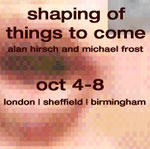
jonny baker points to a number of bloggers that are discussing the shape of things to come gathering.
Monday, October 11, 2004
Why Evangelicals Must Embrace Postmodernity

The Next Reformation: Why Evangelicals Must Embrace Postmodernity and other upcoming books
Sooner or later it was bound to happen: a thoughtful professional philosopher with Christian faith would engage the emerging/postmodern church conversation. The right person for the job, Carl Raschke, has risen to the occasion. Intelligently written for those already knowledgeable and accessible to those needing an introduction, The Next Reformation will become a primary trailhead for thoughtful people who are embarking on the faith journey into postmodernity."
Brian McLaren
Postmodernism has become a four-letter word among many evangelicals. It has been blamed for every malaise of contemporary society and vilified as the greatest threat to contemporary Christian faith. In The Next Reformation, Carl Raschke acquaints readers with what postmodernism really is, and more importantly, what it is not. He argues that evangelical Christianity has allied itself with non-Christian philosophies, including rationalism and evidentialism, and suggests that breaking this alliance and embracing postmodernism may allow evangelical Christianity to flourish once again as a progressive rather than reactionary force in the present-day world.
Raschke begins with a detailed analysis of the current state of postmodernism and evangelical thought. He provides a background to the controversy, revealing what the term has meant in different contexts and how it relates to contemporary evangelicalism. He describes the development of postmodernism, explores the writings of early postmodernist thinkers, and examines how postmodernist thought has influenced contemporary theology from Derridian deconstruction to Radical Orthodoxy.
Raschke then reveals the opportunities postmodernism brings to Christian faith. He examines how postmodern perspectives bring new meaning to the doctrines of faith alone and sola scriptura, illustrating how these doctrines can be revived by means of postmodern language and philosophy. Raschke goes on to explore how postmodern views of hierarchy and organization could alter the structure of the church toward the Reformation theme of the priesthood of all believers.
The Next Reformation finishes with an analysis of postmodern culture and ministry. Raschke examines postmodern strategies of outreach and evangelism as well as the impact of charismatic renewal on postmodern evangelism. He concludes with a plea for the beginning of a new appreciation of the relationship between faith and philosophy.
Baker Academic
This new book by Carl Raschke, who serves as professor and chair of the Department of Religious Studies at the University of Denver as well as an adjunct faculty member at Mars Hill Graduate School in Seattle, seems to be a must read! I understand it's slated to be released next month.
Similarly, I learned that James K A Smith, who wrote the about to be released Introducing Radical Orthodoxy and is currently the Associate Professor in the Philosophy Department of Calvin College, is also working on another book on postmodernism and the church that he's calling Who's Afraid of Postmodernism? A Radical Orthodoxy for the Emerging Church. About the book he writes:
Growing out of my 2003 lectures at L'abri Fellowship in Switzerland, my goal in this book is to critically engage and explain the culture of postmodernity, particularly with a view to the implications of postmodernity for the life of the Church. In the process I'll critically engage the work of figures such as Brian McLaren and Leonard Sweet, offering a 'friendly critique' of their picture of the postmodern church. This will be the first book in a new series I am editing for Baker Academic Press: Critical Theory for the Postmodern Church. Other authors in the series will include John D. Caputo, Merold Westphal, and others. Stay tuned for details.
superman is gone
Christopher Reeve, the star of the "Superman" movies whose near-fatal riding accident nine years ago turned him into a worldwide advocate for spinal cord research, died Sunday of heart failure, his publicist said. He was 52.
link
Saturday, October 09, 2004
Resources for Understanding Jacques Derrida

PARIS - World renowned thinker Jacques Derrida, a founder of the school of philosophy known as deconstructionism, has died, the office of French President Jacques Chirac said Saturday. Derrida was 74.
AP and AFP have obits on Derrida. Also see treatments by the Washington Post and the New York Times (free registration required on both).
A few of us have commented recently that the emergers don't talk that much these days about postmodernism. This may bring a bit of a revival of that, albeit a brief one.
For those who might wish to explore Derrida's influence on the emerging church, some time ago, I had put a few resources on faithmaps' Philosophy/Postmodernism Page on Derrida. I just updated that section in light of this event. You might see especially:
Derrida, Jacques
from The Johns Hopkins Guide
to Literary Theory & Criticism
Jacques Derrida
by John Rawlings
from the Stanford Presidential Lectures
in the Humanites and Arts
Biography and Bibliography
of Jacques Derrida
by Scott David Foutz
from Quodlibet, the online journal of
Christian Theology and Philosophy
Derrida & Deconstruction: Key Points
by Warren Hedges
from the Website of Prof Warren Hedges @
Southern Oregon University
Structuralism/Poststructuralism
by Dr. Mary Klages
from http://www.colorado.edu/
You might also find very useful the book
Derrida for Beginners by Jim Powell
in the delightful British Writers and Readers Documentary Comic Book series. (I have a number of these books and think they're great!)
I also had begun reading John D. Caputo's Deconstruction in a Nutshell: A Conversation with Jacques Derrida and need to pick it back up.
In terms of references, finally I'll mention that in 2002 Kirby Dick and Amy Ziering Kofman directed a documentary called Derrida, which New York Times Reviewer Elvis Mitchell characterized as "adoring and adorable" (free registration required).
I also briefly tease out ways Derrida's thought might helpfully impact theological reflection in the second article of my Delights and Dangers series that Next Wave published three years ago.
Finally, though the 'mappers thinking was mediated through much discussion and the substantial influence of dr. jon gold, I think it's safe to say that Derrida was an influence on us when we were developing the transpropositionality meme. Derrida helps us to see that words as mere logical symbols are not to be confused with intrinsic reality. The implication for people of faith is that we musn't confuse mere information acquisition and transfer with true religiosity. There is a fullness of relationship with God that words cannot encompass.
God is not a Republican or a Democrat
Just found out that Brian McLaren helped to draft this statement.
Friday, October 08, 2004
the "emerging church" meme
stephen said has an interesting post on "emerging church". also see the comments.
Brian McLaren's Church
DJ Chuang alerts us to a ChurchExecutive article on Cedar Ridge Community Church.
a blast of wisdom
I tend to not be drawn to Proverbs 1-9 because in the past it's seemed to me that it had one primary message that I thought I understood: Get wisdom. I often skip right to cp 10.
Lately I've not been feeling terribly wise so a couple of days ago I began at the beginning of this ancient collection. And this morning I realized I'm really missing out by avoiding this portion. e.g.:
Let not steadfast love and faithfulness forsake you;
bind them around your neck;
write them on the tablet of your heart.
So you will find favor and good success
in the sight of God and man.
Trust in the Lord with all your heart,
and do not lean on your own understanding.
In all your ways acknowledge him,
and he will make straight your paths.
Be not wise in your own eyes;
fear the Lord and turn away from evil.
It will be healing to your flesh
and refreshment to your bones.
Proverbs 3:3-8 (ESV)
NT Wright: Summary of Christian Origins and the People of God series
OpenSourceTheology is offering everyone a 44 page summary of NT Wright's books in this series.
jason clark - first reflections on alan hirsch and michael frost
jason posts his first set of thoughts on the recent hirsch/frost gathering.
Thursday, October 07, 2004
A person’s experience should always be greater that their education.
Todd Hunter provides us with very helpful thoughts on a balanced approach to learning.
Wednesday, October 06, 2004
Tuesday, October 05, 2004
the post-emerging church
The new issue of next-wave picked up one of my blarticles on the post-emerging church.
the internet turns 35
Thirty-five years after computer scientists at UCLA linked two bulky computers using a 15-foot gray cable, testing a new way for exchanging data over networks, what would ultimately become the Internet remains a work in progress.
link
We have yet to see what's possible for Christ's church.
Sarah McLachlan
I loved Fumbling Toward Ecstasy be4 Sarah hit huge. Now she's gone transpo.
thanks jordon.
Monday, October 04, 2004
NT Wright Page
Looks like it's been redesigned. A fine resource on all things Wrightesque.
Sunday, October 03, 2004
the millennium matrix blog
Rex Miller - author of The Millennium Matrix - began blogging yesterday.
New Directions in the Pomo Matrix
A lot of folks have been blogging ab Phil DePedal's new pomoChristian tome. I first heard DePedal at one of the New Mexico breakouts a couple of years ago (the one where Brian McLaren and Todd Hunter did the plenaries).
Though emerging folks don't invoke postmodernism as much as they did, say, 3 years ago, DePedal is nevertheless a genius at teasing out the implications of how the modern, tepid, two-dimensional, hyperstructuralized - even Cartesian - approach to service prolegomena is wholly inadequate in the emerging context. Though his words border at times - at least to the sensitive reader - on the bitter as he explores how "the lineguards" impose a nearly Foucaultesque oppression on those who enter their sphere (and DePedal's extended metaphor must be followed carefully to understand his real meaning), the diligent (and - at times - thick-skinned) reader will find her spade work well worth the effort.
The final chapter borders on the poetic as DePedal paints a compelling and beautiful picture of Rortian unity as "seekers of space" team and partner in ever emerging interdependencies to determine what he calls "randomly optimal configurations."
James Doyle's wide reading in this thoughtspace and his obvious intimate knowledge of DePedal's entire corpus distinquish him as an enthusiastic aficionado and incisive commentator. His latest thoughts on DePedal's latest work are well worth careful consideration.
Saturday, October 02, 2004
DA Carson: Becoming Conversant with Emergent
I think the title is unfortunate. I'm pretty sure Dr. Carson doesn't mean to limit his comments to Emergent specifically, but I'm thinking he's intending to reference the entire Emerging Church phenomenon and found a piquant rhyme.
Brian McLaren was asked ab the book on his site and responded,
"I haven’t read a manuscript of the book, but a lot of people have heard lectures that will probably be reflected in the book, and they have told me to brace myself for some pretty strong critique. I haven’t heard the lectures myself, so I really can’t offer any specifics. I’ve read a number of Dr. Carson’s books, and I think our perspectives are quite different; he’s certainly an articulate writer, so I imagine he’ll make those differences quite clear. Anyway, may God bless Dr. Carson, and I hope I will benefit from his critique."
In February of this year, Carson had given a series of three lectures on the emerging church in the Staley Lecture Series at Cedarville University. (They are available for download or hard media purchase starting at $4.50 here.)
Andrew Jones was deeply disturbed by Carson's comments and posted a couple of times on the subject. A number of folks posted comments in response to Andrew and he also highlights Dr David M. Mills' paper The Emergent Church - Another Perspective: A Critical Response to DA Carson's Staley Lectures.

Friday, October 01, 2004
reference: information-guide
Someone surfed into emergesque from an article on emerging church from explanation-guide, which seems to be a wikipedia type online reference.
The With-God Life
Todd Hunter is letting his friends know that he'll be presenting at a Renovare conference called The With-God Life: Spiritual Formation for the Sake of the World with Richard Foster and Todd Proctor at the Newport Vineyard in Costa Mesa, CA on Oct. 15th and 16th, 2004.
Subscribe to:
Posts (Atom)


