Friday, April 14, 2006

McKnight on Judas, 5

Bart Ehrman, in his essay in the National Geographic presentation of the translation of The Gospel of Judas, once again raises his oft-argued point: by the time of Nicea (c. 325) there was a “winning” side and a “losing” side. The winners were the “orthodox.” The losers were the heretics. Prior to that time, Christianity was much more diverse.

...

This is a simplistic summary that masks a multi-faceted reality: we have an apostolic faith that was carried on fairly consistently, with developments no doubt, into the early second century into folks like Ignatius and Irenaeus. There are adumbrations of creeds that were very early that look not a little like the later ones. So, what I’m suggesting is that Bart is overcooking his claims here. Yes, these texts were there; yes, the proto-orthodox fought against these views; yes, the orthodox party became powerful; and yes, the orthodox party shaped the faith we now know as Christianity. No one should dispute that. But, really, how serious was the competition?

...

In my assessment, this is the foundational issue behind all the current swirling trends in anti-Christian debate.
The DaVinci Code, Bart Ehrman’s several books, Elaine Pagels’ books, and others, along with this recent publication are all rooted in this singularly potent idea: the orthodox party suppressed alternative voices. Alternative voices deserve to be heard; therefore, we need to hear what these folks believed about the Christian faith. On top of this, for many, there is the added suggestion that we should try to recover the kind of diversity, bewildering as it was, that characterized pre-Nicean Christianity.

full post

witherington on the gospel of judas, pt 3

ben witherington discusses the discussion he was involved on national public radio.

mcknight on Judas, 4

What has to be observed is this: the climax of the gospel is the return of Jesus to the divine not the death and resurrection of Jesus. Redemption is by way of knowledge, not by way of God’s redemptive act in the death and resurrection. And there is no need for resurrection; in fact, resurrection is an abominable idea for it would involve the goodness of the body.

Nothing could be further from the traditional perception of redemption. And the one who realizes this is Judas, the one vilified. Only he really got it, and the other Gospels distort his heroic deed.

full post

Mark D Roberts on The Da Vinci Code


Scot McKnight recently favorably referred his readers to a Roberts blogpost on the Gospel of Judas.

I hadn't heard of Roberts before but when I surfed to his site, I found that the Judas post was part of a longer series on the Da Vinci Code that looks like interesting.

And Roberts does have some impressive credentials:

The Rev. Dr. Mark D. Roberts is a pastor, author, speaker and blogger. Since 1991 he has been the Senior Pastor of
Irvine Presbyterian Church in Irvine, California (a city in Orange County about forty miles south of Los Angeles). Before coming to Irvine, Mark served on the staff of the First Presbyterian Church of Hollywood as Pastor of Education.Mark studied at Harvard University, receiving a B.A. in Philosophy, an M.A. in the Study of Religion, and a Ph.D. in New Testament and Christian Origins. He teaches classes in New Testament for Fuller Theological Seminary and San Francisco Theological Seminary.


mcknight on Judas, 3

This is a good time to explain that this ms was actually discovered in about 1978, but its owner at the time wanted more money than museum curates, etc., were willing to pay. To make an involved story short, the ms ended up in a safe box in a bank, and in the process it had been folded to fit into a box and frozen to protect it — neither of which were good ideas. Folding it destroyed precious lines and freezing it damaged the ms irreparably. When Rudolphe Kasser finally was granted rights to encase the leaves of the ms in glass and work on its restoration, which took several years, it began to see the light of the day. Only this year is its translation being released and by the end of the year a full set of photographs and official critical text will be released.

full post

scot mcknight on the gospel of judas - part 2

“The secret account of the revelation that Jesus spoke in conversation with Judas Iscariot…” — this is how The Gospel of Judas [GJ] begins. Jesus, GJ tells us, did great wonders and spoke about mysteries and was sometimes “appeared” to them “as a child”. This is the language of docetism, for Jesus only looked like a human but the fleshy body was not like others’ bodies. Then comes Scene I:

The disciples were together at a meal and Jesus laughed at them; Jesus challenges them to have the courage to “stand before my face.” “But their spirits did not dare to stand before him except for Judas Iscariot.” Jesus laughed because they were thanking God for their food, but the real (ultimate) God didn’t make anything material like food. They need enlightenment.

Judas confesses to Jesus that he [Jesus] is “from the immortal realm of Barbelo”. Barbelo is the Divine Mother of all and is the forethought of the Infinite One. Judas’ confession is significant enough that Jesus and Judas have to step away from the others so Jesus can divulge the mysteries of the kingdom, which pertain to upper and outer realities that are at variance with the earthy-minded God and religion of the other disciples.

GJ is gnostic.

- complete post

- Part 1

Philip Jenkins on The Gospel of Judas

The most important point is that all gospels are not created equal. Some have more historical credibility than others, more claim to provide an accurate and nearly contemporary picture of the time of Jesus and his first followers. Among the various competitors, the four canonical gospels have no serious rivals. All were in place in substantially their modern form by around 100 C.E., and all describe historical settings firmly rooted in the first century. By contrast, the vast majority of Gnostic gospels were composed after 150 C.E., and many as late as 250.

- link to article

At Ben Witherington's recommendation, I've begun reading Jenkins' book Hidden Gospels: How the Search for Jesus Lost its Way. Darrell Bock also recommends Hidden Gospels in his Breaking the Da Vinci Code.

ht: pontifications

Thursday, April 13, 2006

Brian's On CBS Tonight...

...has been posted here. Just scroll down to "A New Kind of Christianity?"

three types of emergers

Ed Stetzer has published a piece where he analyzes emerging church conversation participants into three groups:

Relevants: I believe that some are taking the same Gospel in the historic form of church but seeking to make it understandable to emerging culture;

They are simply trying to explain the message of Christ in a way their generation can understand.

Reconstructionists: some are taking the same Gospel but questioning and reconstructing much of the form of church;

The reconstructionists think that the current form of church is frequently irrelevant and the structure is unhelpful. Yet, they typically hold to a more orthodox view of the Gospel and Scripture. Therefore, we see an increase in models of church that reject certain organizational models, embracing what are often called “incarnational” or “house” models.

Revisionists: some are questioning and revising the Gospel and the church.

Revisionists are questioning (and in some cases denying) issues like the nature of the substitutionary atonement, the reality of hell, the complementarian nature of gender, and the nature of the Gospel itself. This is not new -- some mainline theologians quietly abandoned these doctrines a generation ago.


I'm not sure at all that most Revisionist Emergers are denying the Gospel (as one might surmise from reading this). I think that many Revisionists are exploring what it means to work in Kingdom.

Nevertheless, I think this analysis is insightful and his story is worth reading. His categories somewhat overlap the three categories I had suggested some time ago, though I didn't explicitly address the theological component.

We don't want more dividers, but I think Stetzer's treatment is a pretty good categorization of what's actually happening on the ground in our conversation.

ht: David Wayne

Mark Goodacre Coverage of The Gospel of Judas

Mark Goodacre covers New Testament scholarship from evangelical and non-evangelical viewpoints:


ht: scot mcknight

Wednesday, April 12, 2006

Bart Ehrman's Commentary on the Gospel of Judas


Ehrman's commentary is currently #6 of Amazon.com's Top Selling Books. That's #6 of all books irrespective of category.

The new paperback of The Da Vinci Code is #14

This Just In: Brian McLaren on CBS on Thursday

Brian's on the CBS Evening News tomorrow night and will be in the Wall Street Journal on Friday.

ht: Emerging Mosaic

Brian's New Domain


anewkindofchristian.com has morphed to brianmclaren.net.

a bit of a new design too.

megapost on the gospel of judas

If you want to be really cool, though, tell your friends about a little-known document that's even more amazing than the Gospel of Judas. It's called the Epistle of Judas, and it makes some pretty wild claims. First, the document is reportedly older than almost any New Testament book, and it draws heavily upon non-canonical Jewish literature. It includes some odd stories like the archangel Michael fighting with the Devil over a corpse, and quite a bit of discussion about sexual indulgence. Unlike most New Testament books, the Epistle of Judas appears to be written in Judea itself. The book makes the dramatic claim that its author, Judas, was the brother of the apostle James (the first leader of the church). Judas apparently makes a subtle claim that he's Jesus' brother, too.

This Epistle of Judas includes some advice that may be applicable for those frustrated with all the hype over the much-later Gospel of Judas. "Have mercy on those who doubt," Judas wrote. "Save others by snatching them out of the fire; to others show mercy with fear, hating even the garment stained by the flesh."*


ted olsen does one of his usually excellent around the rooms on the topic.

Tuesday, April 11, 2006

Raymond E Brown's Review of Pagel's "The Gnostic Gospels"


In reading around The Da Vinci Code and the Gospel of Judas the last few days, I've come across references to well-regarded NT scholar Raymond E Brown and his New York Times review of Elaine Pagel's book The Gnostic Gospels. Had a bit of a time finding it but here it is. You'll need the free Adobe Acrobat Reader to read it.


UPDATE: Readers, I need your help. The review mentioned above was printed on 20 January 1980. Though well worth reading, tt's not, apparently, the review mentioned by Darrell Bock in his recent book Breaking the Da Vinci Code which he says was published by the New York Times in November 1979. I'm having a difficult time finding that particular review, even when searching for all "Raymond E Brown" or "Raymond Brown" articles in the NY Times archive before 1980. Any help, guidance, thoughts, or - even better - a url with the Nov 1979 article?


graphic from REBrownRecordings.com

looking at the emerging church

I'll be looking at his post more closely soon, but for now I just wanted to point readers to Andrew Jones' post about Brian McLaren and others at the recent Emerging Church Conference in Toronto. He also links to the comments of those who were there. This is a good place to get one current picture of Emergent, the broader Emerging Church, and the response of the even broader Evangelicalism that largely gave Emergent and the Emerging Church birth.

scot mcknight...

...reflects on his first year of blogging.

One does not always find the combination of true scholar and teachable heart that Scot exemplifies.

Your Comments


I know that the way blogger's commenting system is set up can result in emergesque readers unintentionally leaving anonymous comments. It's good for the emergeque reader community if folks know who says what. So, if you don't mind, please sign your name to your comments. You can sign it within the body of your comment if you wish.

thanks,

Stephen Shields
sshields@gmail.com


graphic courtesy of stock xchng

Monday, April 10, 2006

witherington on judas, part 2

I was on the phone yesterday with my close friend Dr. A.J. Levine who teaches at Vanderbilt Div. School. She was called in late in the game to give a bit more balance to the group of scholars unveiling the Gospel of Judas. I asked her point blank: " Well A.J. is this document of any importance at all in helping us understand the historical Jesus or the historical Judas and their relationship?" She said unequivocally--- "none whatsoever". In other words, we need to all have our baloney detection meters set to 'heightened alert' as we watch the special on the Gospel of Judas tonight. While this document will tell us more about the split off movement called Gnosticism, and so is of considerable interest as we learn more about church history in the period from the late 2nd century through the fourth century, it tells us nothing about the origins of Christianity or the beginnings of the Jesus movement.

...

As she reminded me, the way Irenaeus describes the content of the Gospel of Judas that he knows, it has very different content from this Coptic Gospel of Judas which we are now being regaled with.

...

I would just add that it is perfectly possible that the document Irenaeus knows became a source for this later Coptic document, which again does not date, by carbon dating to before the beginning of the 4th century A.D. This places the Coptic Gospel of Judas at even a further remove from the first century A.D. and its documents. It is entirely possible that the Gospel of Judas we now have is not the original document created by the Cainite Gnostics that Irenaeus knows and speaks of.


his entire comment

- part 1

Sunday, April 09, 2006

As a Public Service


Go to this MSN site, key in your zip code, and find the cheapest gas available in your area. It's updated daily.


graphic courtesy of stock xchng

Friday, April 07, 2006

i love it when scholars blog

...the text is late, the orthodox Christians said The Gospel of Judas was nonsense, and the theology (which is clearly gnostic) is not 1st Century Jewish/Galilean. No one can dispute any of these three points.

scot mcknight weighs in on the gospel of judas.

he promises more on Monday.

Ben Witherington on the "Gospel of Judas"

First let us deal with the facts: 1) we do not have a Greek text of this Gospel, we have a Coptic one from which the English translation has been made. To simply state this text was based on Greek text is to argue without hard evidence. The fact that Irenaeus mentions this document may suggest there was a Greek original, but we do not have it, and the translation done is not based on any Greek text. We need to be clear on this: 2) You will find a link above to the article in today's NY Times about this find. You will see me suggesting we all need to take a deep breath before consuming too much baloney; 3) this papyrus carbon dates to about 300 A.D. We only know some document called the Gospel of Judas existed around 180 because Irenaeus mentions it. One could also raise the question of whether Irenaeus is referring to the same document, but probably he is. 4) This document reflects the same sort of dualism that we find in many other Gnostic documents-- matter or flesh is evil or tainted, spirit is good. Thus at one juncture in the Gospel of Judas Jesus says to Judas that he will become the top disciple for "you will sacrifice the man that clothes me." In other words Judas is the good guy who helps Jesus get rid of his tainted flesh and become a true spiritual and free being.

This of course is miles from early Jewish theology about the goodness of creation and the flesh, much less the belief that God intends to redeem the flesh by means of resurrection. Much of what Jesus is depicted as saying in the Gospel of Judas the historical, thoroughly Jewish, resurrection believing Jesus could never have said. In other words it is revisionist history being done by a splinter group of Gnostics. This group was at variance with the theology and praxis of the church whose beliefs could in fact be traced back to Jesus and his earliest disciples.

...

My greater concern is the revisionist history being tauted by Elaine Pagels, Karen King, Bart Ehrman, Marvin Meyer and others, on the basis of such Gnostic documents, wanting to suggest that somehow, someway these documents reflect Christianity at its very point of origin--- the first century A.D.

Such scholars indeed represent a small minority of NT scholarship, and in fact, like the early Gnostics, are busily creating a new myth of origins that suggests that Christianity was dramatically pluriform from the beginning. Unfortunately, as a historian I have to say that this is argument without first century evidence.


We have no first century evidence of Gnostics or Gnosticism. This is a movement that reacted to mainstream Christianity, and emerged from it sometime in the middle of the second century A.D. Every shred of first century evidence we have suggests that the actual physical life, death, and resurrection of Jesus was at the heart of the belief of the earliest Christians--- all of whom were Jews, not Gnostics. It simply will not do to suggest that the esoteric Gospel of the Gnostics bears any resemblance to the Jewish creation and redemption theology of Jesus and his first Jewish followers.

NT Scholar Ben Witherington blogs on the "Gospel of Judas."

Thursday, April 06, 2006

The Gospel of Judas

It's not 80 gospels, rather it's 81.

Ok, Teabing said, "more than 80" but I couldn't turn that into a dramatic line.

Get ready for another perfect storm of Jesus controversy.

News outlets are suddenly running stories about the Gospel of Judas, just in time for the new Da Vinci Code - based on the bestseller, now #1 again, by Dan Brown that's being released on 19 May.

Some might get the impression that this a new discovery. It's not; the document has been known of since the late 2nd Century. This Coptic copy of the orignal Greek document was discovered in the 70's and has been dated to around AD 300. A Google search on the phrase "gospel of judas" returns over 100,000 pages.

According to ABC News, James M. Robinson, who was the General Editor of the Nag Hammadi in English and considered a foremost authority on such Coptic manuscripts, said earlier this month that

the text is valuable to scholars of the second century but dismissed the notion that it'll reveal unknown biblical secrets.

ABC News continues...

He speculated the timing of the release is aimed at capitalizing on interest in the film version of "The Da Vinci Code" a fictional tale that centers on a Christian conspiracy to cover up a marriage between Jesus and Mary Magdalene.

"There are a lot of second-, third- and fourth-century gospels attributed to various apostles," Robinson said. "We don't really assume they give us any first century information."

references

- NY Times article: "Gospel of Judas Resurfaces after 1,700 Years"
- Christianity Today article: "The Judas We Never Knew"
- ABC News: Experts Doubt 'Gospel of Judas" Revelation

on the death of young leaders

charlie wear addresses this theme - and the loss of friends - in the April 2006 issue of Next-Wave.

please pray for micah

I didn't know Mark Palmer, who passed on 27 March. I only knew him thru the ubiquitous button that someone created for him - surely a labor of love.

I knew that Mark lost his first wife to cancer, but the implication of what's happened didn't hit me until I read Brother Maynard's comment that now 4 year old Micah had lost both parents to cancer.

Please pray for little Micah who is now with Mark's 2nd wife (now widow) Amy. Pray for them both. Amy says he's crying in his sleep.

God is even bigger than this.

Wednesday, April 05, 2006

Bart Ehrman


Dr. Ehrman is a Professor of Religious Studies at the University of North Carolina at Chapel Hill and has written a very popular book called

Misquoting Jesus : The Story Behind Who Changed the Bible and Why

Ehrman is a past evangelical turned agnostic.

I've run across Ehrman as I've been studying issues related to Dan Brown's Da Vinci Code. (Ehrman has also written a recent book critical of Da Vinci Code).

I plan to post more about the Da Vinci Code later, but I simply
wanted to link to recent comments by Ben Witherington and Dan Wallace on Ehrman's most recent book that can be found here.

For what it's worth, my own undergraduate degree was in Classical Greek and I also had the opportunity to study Textual Criticism under the late Harry Sturz and I found that learning about such matters strengthened rather than weakened my faith.

Tuesday, April 04, 2006

"NCC's 2006 Yearbook of American and Canadian Churches cites two 21st century trends: blogging and the Emergent Church"

...the National Council of Churches' 2006 Yearbook of American and Canadian Churches examines the latest electronic miracle -- the blog -- and considers its influence on the Emergent Church (EC).

...


The Emergent Church is defined by Yearbook Editor, the Rev. Dr. Eileen W. Lindner, as a "conversation" (some would say movement) birthed in 20th century Protestantism and "characterized by a robust, energetic and growing online and hardcopy literature" that attempts to shape responses to contemporary culture.

Common attributes of the EC, Lindner believes, are an emulation of the person and ministry of Jesus, a fondness for anecdotes and stories as means of discovering truth, a focus on mission, and a stress on the centrality of worship, even in experimental forms.

Scores of EC proponents are using blogs to advance these ideas and stimulate dialogue. Lindner says it is not possible to generalize them into a predictable demographic class, but she offers examples of prominent EC bloggers: John O'Keefe, founder of www.ginkworld.net, "an emerging/postmodern site exploring what it means to be a follower of Jesus in today's world;" Spencer Burke, former pastor, founder of
http://theooze.com Web site, "dedicated to the emerging Church culture;" Mark Driscoll, founder of Mars Hill Church (www.marshillchurch.org) in Seattle; Mark Pearson, founder of www.cityside.org.nz in Aukland, New Zealand; and Karen Ward, founder and pastor of the Church of the Apostles, www.apostlechurch.org, in Seattle.

...

The 2006 Yearbook of American and Canadian Churches cites the following blogs that are used by Emergent Church practitioners for communication:

Biblical Theology-biblical-studies.blogspot.com
Bible Software Review Weblog-www.bsreview.org/weblog/blogger.html
Biblioblogs- www.biblioblogs.com
Café Apocalypsis-cafeapocalypsis.blogspot.com
Christian Alliance for Progress-blog01.kintera.com/christianalliance
Christian Origins-www.christianorigins.com
Christianity Applied-christianity-applied.blogspot.com
Christianity Today Online-www.christianitytoday.com/ctmag/features/
weblog

Chuck Currie-http://chuckcurrie.blogs.com/chuck_currie
Daily Hebrew-dailyhebrew.blogspot.com
Department of Theology at University of Blogistan-theologydept.
blogspot.com

Emergesque-faithmaps.blogspot.com
The Evangelical Outpost-www.evangelicaloutpost.com
Get Religion-www.getreligion.org
Jesus Creed-www.jesuscreed.org
Idle musings of a bookseller-anebooks.blogspot.com
The Magdalene Review-www.magdalenereview.org
NCC Interfaith Relations-nccinterfaith.blogspot.com
Open Book-amywelborn.typepad.com/openbook
Religion News Blog-www.religionnewsblog.com
Religions of the Ancient Mediterranean-www.philipharland.com/Blog
Sollicitudo Rei Socialis-socialconcern.blogspot.com
Stumbling Toward Divinity-http://leppercolony.blogspot.com
The Sword-michaelturton2.blogspot.com
Think Christian-www.thinkchristian.net

from Church Executive Magazine - Link

not sure that I would characterize all of these as emerging church, but we appreciated being included!

ht to Chuck Currie

Monday, April 03, 2006

eFriends of Abductive Column: Interview with Stephen Shields

Fred Peatross recently interviewed me for his eFriends of Abductive Column:

Stephen Shields is the founder of faithmaps.org and the moderator of the faithmappers' online discussion group. Stephen is also a Manager with USA TODAY, formerly a bi-vocational pastor with Brian McLaren, and a frequent contributor to Next-Wave Magazine. Stephen received a M.Div from Grace Theological Seminary and lives with his wife Bethany and three daughters - Michaela Siobhan, Skye Teresa, and Alia Noelle - in the Baltimore- Washington corridor.

I guess the first thing everyone would want to know is what was it like pastoring with Brian McLaren?

One of Brian's characteristics that I have appreciated the most is how empowering he is towards others. Before I went on staff at Cedar Ridge in 1999, I had been working there in a lay capacity for 10 years. Brian opened up doors for me to lead the small groups ministry, to sing, to act in the drama troupe, to speak on Sunday mornings, etc. It was a great season and I will always be grateful for his role.

You've been engaged in the emergent conversation for sometime now, can you tell us why?

There are a couple of resonances that I have with the emerging church. As I've commented elsewhere, when I was in seminary, I walked away with something of the impression that the evangelical church pretty much had every theological i dotted and every doctrinal t crossed. Over the years, my own personal theology - on the other hand - has shifted from encyclopedia to outline. There are definite points on the outline that are known, but there is much unknown that's between the bullet points. In the past, I've used the faithmap metaphor to describe this. As with a map, there are known points of reference and there is much that is unknown. Moreover, the map is not the same as the reality and the map is used to go somewhere. The map is not the point.

It has also seemed to me that Evangelical Christianity - and I do consider myself an Evangelical - has perhaps at times truncated spiritual transformation to mere information transfer. Spiritual change and activity certainly involve propositions, but they also transcend them. This is some of the thinking behind the term transpropositionality (for an understanding of this word click here) that the faithmaps discussion group formulated some years ago.

These are the main reasons that I have participated in the emerging church conversation.

What role has blogging played among the Christian community? How is it affecting the conversations and movements within the body of Christ?

The declining cost of information that's been precipitated by the internet is fascinating to me. Society changes as data becomes cheaper. The advent of publishing helped disrupt the existing ecclesial authority structure of the 16th century Catholic church and you have the Protestant Reformation. Television and Radio brought the cost of information down further. Now with websites, email, instant messaging, and blogs the cost of info declines even further still. I was recently involved in a controversy between two countries and two major emerging church organizations that began and largely ended within about 72 hours. It's lifespan was so short because of the immediacy of online communication. It's not difficult to imagine that in another age such a controversy could have spanned the course of 3 years rather than 3 days. Another impact that the declining cost of information is having on the church is that whereas 200 years ago (in North America at least) your primary source of theological information was your pastor, today if you're curious about positions and reasons for a particular theological position, with a little google finesse you can easily find more information that you can probably take the time to read.

But this is also more difficult for the church because whereas in the past insularity might have precipitated a premature certainty, the onslaught of information, arguments and variant viewpoints calls for increased humility. However, truth is ultimately the winner when humility is combined with freely available information.

Is Truth relative or absolute? Or both? And if both- which flows from which? Which is the chicken and which is the egg? What is the criterion for determining Truth's certitude?

You ask a blatantly philosophical question so please forgive me if I wax blatantly philosophical! It's your last question which is the most important, in my opinion; but I'll answer in order. Truth is both relative and absolute. Any reader of this interview will take a specific amont of time to review all or part of it - that measure is absolute and measurable. But if they are bored with all this epistemological droning, the length of reading time will seem interminable. If - on the other hand - they are excited about such philosophical musings, the length of reading time will seem to pass quickly. The relative flows from the absolute. Your criterion is a bit more sticky. An anthropocentric epistemology yields only subjectivism and uncertainty. Man, as Schaeffer used to say, is an insufficient reference point. His perspective is finite. However, a faithful theocentric epistemology allows for certainty because its reference is the infinite God. But adopting such a stance is very humbling because it's not based on the knower's capacity for knowledge; it's based on God's knowledge and faith in Him.

If anyone is still reading, Brian McLaren and I had an interesting email discussion some years ago on "knowing." He's given me permission to post here.

Bob Robinson....

....is blogging again after a recent brush with death.

Welcome back, Bob!!! Are we glad to hear from you again!

Sunday, April 02, 2006

Criswell Journal on the Emerging Church

the most recent edition of the Criswell Journal treats the ec.

articles include

An Interview with Brian McLaren
– by R. Alan Streett

"Narrating the World Once Again: A Case for an Ancient–Future Faith"
– by Robert Webber

"An Ecclesiological Assessment of the Emergent Church"
– by John S. Hammett

"Mountain or Molehill? The Question of Truth and the Emerging Church"
– by David Mills

"Some Suggestions for Brian McLaren (and his Critics)"
– by R. Scott Smith

"A Pastoral Perspective on the Emergent Church"
– by Mark Driscoll

"A Selective Bibliography of the Emergent Church Movement"
– by Andrew D. Streett

ht - steve mccoy


Saturday, April 01, 2006

great news ab bob robinson

Yippee! It’s Saturday March 25 and Bob is home (sleeping cozily, I might add). I spoke to him, and it was nice to hear him joking and talking. He came home a full 7 weeks after he went in so unexpectedly. We know that God spared his life and we give God glory for bringing him through to this point!

from scot mcknight

Friday, March 31, 2006

Mark Driscoll apologizes to Brian McLaren and Doug Pagitt

Since leaving that team I have been increasingly concerned about some of the theological conversations that are taking place, which has led to frustration and anger on my part. The result was an email I fired off in angry haste to the “Out of Ur” blog in response to a piece by Brian Mclaren in Leadership journal on his pastoral response to the homosexual issue. In short, I took some cheap shots at Brian and Doug.

... I have come to see that my comments were sinful and in poor taste. Therefore, I am publicly asking for forgiveness from both Brian and Doug because I was wrong for attacking them personally and I was wrong for the way in which I confronted positions with which I still disagree. I also ask forgiveness from those who were justifiably offended at the way I chose to address the disagreement. I pray that you will accept this posting as a genuine act of repentance for my sin.

the whole post

ht to jordon

Thursday, March 30, 2006

interview with jordon cooper

jordon interviewed me some time ago and just posted it to his blog.

thanks jordon!

Wednesday, March 08, 2006

Phil Johnson on the Emerging Church

Emergent No posts the transcript of Johnson's critique.

Phil Johnson, Executive Director of John MacArthur's Grace to You , is best known for his work celebrating Spurgeon and "Phil Johnson's Bookmarks."

ht to justin taylor.

Monday, March 06, 2006


Walking in the Desert

My good friend Joe Ventura has taken up his blog again and his thoughts will be worth perusing; I've added his blog to my bloglines public blogroll (how did we ever manage without these aggregators)?

Joe is a great drummer, a fantastic school teacher, has great insights, and if he flexes his writing chops on his blog, readers will find him to be a hilarious writer.

Enjoy!

Sunday, March 05, 2006


the declining cost of information: a benefit and a potential drawback

a benefit

When I was in seminary, I somehow found out about available recordings on cassette of a former Dallas Theological Seminary Systematic Theology professor named S Lewis Johnson. He was an elder at Believers Bible Chapel in Dallas, TX. The church provided these cassettes for free, requesting no donation. When I pressed them, they let me know that the tapes cost ab $3 each. I would send them $3 and get a tape. I don't know how many I ordered and enjoyed listening too. Dr. Johnson loved God and was a very intelligent and educated lecturer, who went to be with God in 2004.

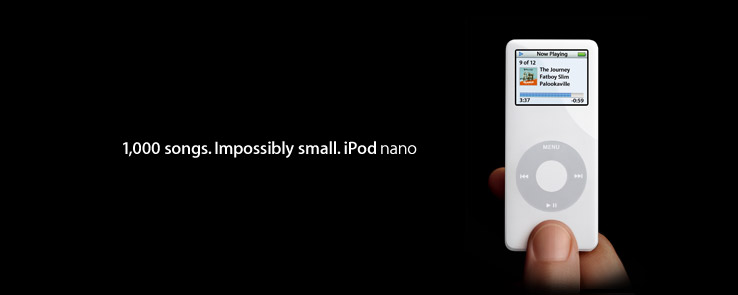
Recently, I discovered that someone(s) at Believers had put up what appears to be all of Dr. Johnson's sermons up for free listening or download here. I have been happily downloading message after message, importing them into iTunes and then putting them on my Nano.

Some of the audio recordings are quite old, though I cannot see where the dates are ever listed. In one talk in his series on Isaiah I was just listening to, Dr. Johnson mentions as contemporaries former Secretary of State Dean Rusk and President Lyndon Johnson. I know that in the series I'm listening to now on Daniel, Dr. Johnson is speaking in 1979 because he mentions the year, SALT II, and President Jimmy Carter.

Dr. Johnson's tapes were sent by Believers Bible Chapel all over the world. I have been marveling at the fact that now in 2006, 12 years after his death, Dr. Johnson's wonderful teaching has a far wider reach.

Another benefit of the declining cost of information.

a drawback

A few days ago during my commute I was struck by something else: When Dr. Johnson at one point mentioned another verse in Daniel, all of a sudden in background I heard the rustling of what sounded like scores of pages. In this day of Scriptures on Powerpoint in Sunday morning messages, I cannot even remember the last time I've heard that sound.

I realized for all my triumphalism about the declining cost of information, one can argue that something has been lost too. There was an intimacy with the Scriptures that I heard. A Berean like eagerness reflected in the suddenly rustling pages. It was truly a beautiful sound.

Yes, of course one's Christianity can only be about information. Transpropositionality is not optional.

Yes, of course the declining cost of information is a good thing.

But for the first time this experience made me appreciate how the actual physical handling of the pages of Scripture is not a bad thing if it represents and advances somehow a more intimate relationship with what God has to say.


image from stock.xchng

Saturday, March 04, 2006


The State of KatrinaGrace

Since Katrina hit, Beth and I have been involved with our church's response to the disaster. This morning, I had a great opportunity today to speak to Grace Community Church's Men's Ministry about

Slideshow here.

My amazing Amazon Wife has been down there on two of the teams and I'm planning to go in May.

Friday, March 03, 2006


malcolm gladwell...

... is blogging.

ht to jordon

Thursday, March 02, 2006


music

I noticed last.fm a few days ago via Joe Thorn. Now Joe has a post up on it. It's a free music player that plays according to your musical preferences. So for example, I tell it I like Rogue Wave, Wilco, and The Avett Brothers and it plays music from these guys as well as from groups and singers who are in the genre ranges of the ones I like. Pretty cool.

You can skip songs you don't like (even block them so they won't be played again) and mark the ones you really like. There is much more to the site than this, but this should be reason enough to check it out.


Steve McCoy points us to last fm

Similarly, I have been totally enjoying pandora, which seems to be about the same thing.

my nano is my #1 audio modality, but I like pandora for introducing me to new stuff I might like.

Wednesday, March 01, 2006


emergent and her critics

scot mcknight highlights a recent meeting of emergent leaders and some of her critics.


photo from stock.xchng

Tuesday, February 28, 2006

you must see this video

pls trust me.

"why i'm post-emergent"

It finally had to happen I guess. I’ve just felt to often that the values I embraced for living the faith and I thought I saw in the emergent conversation have not materialized in reality. So I finally have to admit (not that anyone cares) I’m post emergent. Why? Here are five reasons.

  1. The conversation still looks to much like the old conversation, white, male and academic. The dominant culture still dominates.
  2. The values behind the conversation aren’t readily expressed in actions. No generous orthopraxis to go with the generous orthodoxy. (see my previous post)
  3. The lexicon of the white European theological framework which still dominates. There is very little inclusion of black theologians and the theological framework of people of color. People of color seem to be included in the conversation only if they are willing to use this language and framework. It seems we all need to read NT Wright in order to have any credibility.
  4. Talk, talk and more talk. My experience is we love to talk about this stuff but other than retro worship stuff we don’t get around to acting on it. Even so talk about diversity has never come to the fore. I want to be the church and act like the church not just talk like the church.
  5. Ultimately its about relationships and I have made some good ones which go beyond the whole emergent (non movement) thing. So I’ll go about the spiritual practice of reconciliation through relationships with my brothers and sisters and leave emergent tag to others.

andre daley explains.

it was #5 that i resonated with the most. i think we all long for the transpropositional. Now, for me, that's something I've gotten out of the emerging church conversation. But I also realize it's totally possible to talk about being transpo more than actually being transpo!

ht to jordon.

Monday, February 27, 2006

Audio of CS Lewis!

Roger of the A Team points us to "the only surviving footage of CS Lewis' broadcast talks" on the BBC's Website.

Sunday, February 26, 2006


Tim Keller in the New York Times


Within a year of its founding in 1989, however, Redeemer had grown from 50 people to more than 400. By the end of 1992, the church had swelled to more than 1,000 people. Since then, it has continued to grow steadily, all while renting space in several locations.

Sept. 11 proved to be a defining moment for the church. On the Sunday after the terrorist attack, more than 5,000 people showed up. So many people packed the church's Sunday morning service that Dr. Keller called another service on the spot, and 700 people came back to attend. While attendance returned to normal in other churches after several weeks, Redeemer kept attracting about 800 more people a week than it had drawn before the attack.

"For the next five years, I would talk to people about when they joined the church, and they said right after 9/11," Dr. Keller said.

link (free registration required)

I think he first hit my radar screen in talking to Steve Knight at the Hard Times Emerging Church Cohort and DJ Chuang, also @ the Hard Times, is faithful to mention Keller's exploits on his blog and has a useful page on him. A few weeks ago, I started pulling down some of the talks DJ points to and have been throwing them on my Nano. I like the guy.

ht to Justin Taylor


Don Miller and John MacMurray's To Own a Dragon, Reflections on Growing up Without a Father

Miller's publicist sent me a review copy of this book and my wife has been inhaling it the last two days. She comments:


I loved Don Miller's "To Own a Dragon, Reflections on Growing up Without a Father." Although it's written for men, I was laughing so hard, my husband kept telling me, "Be quiet, you're going to wake the girls!" Thoughtful and
honest, Miller details his insecurities and foibles with poignancy, and says to the rest of us perhaps the most "Christian" thing we can say to one another: "You're not alone."

Saturday, February 25, 2006


Witherington, Grudem and the ESV

Wayne Grudem posts comments in response to Witherington's earlier post (now deleted) on the origin of the ESV.

I should also comment that after receiving feedback and information, Witherington moderated his earlier comments.

Grudem's comments are interesting in and of themselves in terms of giving a history of the ESV.

ht to Justin Taylor

The entire conversation is also interesting because it once again shows how the fast interaction available through blogs allows for a healthy self-correction mechanism in theological and ecclesial conversation. Humility is, however, the toggle on whether such conversations are salutary or detrimental. I do suggest that the toggle is not the medium itself (some have depreciated the medium because such conversations can and often do go negative) but the character of those participating. See earlier posts do blogs democratize knowledge - pt 1 and pt 2 and my response to Doug Pagitt's recent decision to stop using blogs to share and discuss ideas.

Sunday, February 12, 2006

further evidence of the declining cost of information...

...on the church.

A Southern Baptist Convention Pastor emails Andrew Jones how blogging is disrupting (helpfully or not) denominational proceedings (now covered by Christianity Today) that normally would receive scant attention.

The internet and blogging make information broadcast and interaction less expensive. This changes institutional and societal structures.


Tuesday, February 07, 2006


Please pray for Bob Robinson

Fellow Blogger and frequent emergesque commenter Bob Robinson had emergency heart surgery Saturday night.

Tonight Scot McKnight posts:

Hi. Today is Tuesday, Feb. 7. Some of you received an update from Donna N. already today. I just talked to Linda. Please continue to pray for Bob Robinson and his family. This morning he took a turn for the worse. Linda gave me this update: Bob’s oxygen levels dropped a lot this AM and they checked him for blood clots and infections. He is back on full support of the machines because of this. His lungs are not functioning, so he is on 100 percent oxygen and has “acute respiratory distress syndrome.” The doctors are working to figure out why this is happening. Pray for wisdom and excellent judgment.

Please pray for Bob's wife Linda and their three kids too - Trey (7), Joel (5), and Kaira (5).

Sunday, February 05, 2006


"Seven Habits of Successful Emerging Discussions"

The February Next-Wave features a very helpful article by North Park University's Scot McKnight with advice on how to talk about with Emerging Church.

Wednesday, February 01, 2006

why I consider myself part of the emerging church

I'm genuinely curious why folks participate in the ec conversation. Last April when Will Sampson, Nick Ciske, Steve Knight, Aaron Flores, DJ Chuang and I made up the unofficial "emerging church track" of the Internet Evangelism in the 21st Century Conference, over dinner one night we did an around the room with the question: why are you in the emerging church?

What really struck me was that most of the answers were relational and not primarily theological or practical. Yet on further reflection I suppose that shouldn't be shocking. Though I answer that question primarily in theological and praxis terms, there's no question that I entered the conversation primarily through the influence of the man who had been my pastor since 1988.

Nevertheless, this relational connection is not the first thing that comes to mind when I'm asked such a question. My resonances with the emerging church movement are two:

  • My theology has segued from encyclopedia to outline.

    I've detailed this more in some comments I've made on the term "faithmaps" but the impression I walked away with from seminary was that we in the evangelical church pretty much had all of our theological i's dotted and doctrinal t's crossed. Through the years, I've come to the conclusion that our personal theologies are generally outlines, not exhaustive encyclopedias. There are known items in the outline but there's much that's not filled in.

  • I've come to embrace the transpropositional.

    It has been my observation that evangelicals - whether implicitly or explicitly - sometimes rely on information transfer as the omnicompetent modality of spiritual transformation. We could call this propositionalism. I've come to believe that spiritual change only occurs in the context of relationship - either vertically with God or horizontally with others or - perhaps usually - both. This is not, of course, an apropositional context, but it is a transpropositional context. There is something conveyed in a hug, a shared meal, the sharing of service experiences, the presence of another, that is not entirely capturable by lexical symbols.
Some may be disappointed to read that I have not found that my resonance with the ec has led to the overturning of any primary point of what I previously considered orthodoxy. And I also haven't found the ec conversation leading me to question any previous conclusion I had made on major points of morality. Sometimes, I have feared that for some these two types of changes are what for them is primary. I genuinely don't know if that is the case or not. Perhaps it is most accurate to say that I find myself embracing what is old in a new way.

And so this is where I resonate with the emerging church and why I participate in the ec conversation.

Again, I'm genuinely curious: If you consider yourself part of the emerging church - why?


things that happen as the cost of information declines

"Effective January 27, 2006, Western Union will discontinue all Telegram and Commercial Messaging services. We regret any inconvenience this may cause you, and we thank you for your loyal patronage. If you have any questions or concerns, please contact a customer service representative."

Western Union stops sending telegrams.

As Rex Miller, Francis McInerney, and Sean White have noted, the lowering cost of information has a disruptive effect on society. Western Society has seen this with

  • writing
  • the book
  • radio
  • tv
  • the internet

When I was in seminary, I used to contact Believers Bible Chapel in Dallas and request cassette tapes of the now late S. Lewis Johnson, a former Dallas Theological Seminary professor who was a fine teacher.

I just discovered that Believers Bible Chapel has been placing Dr. Johnson's messages and lectures on their website and I've been filling up my Nano.

First hardware changes, then software, and then - lagging far behind - is users adjustment to the new capabilities. It is still believed that those who wish to learn the church's theology need to travel to where the books are and to where the folks are that have read all the books. With new technologies, such herculean efforts are less necessary when all that is envisioned is information transfer.

Saturday, January 21, 2006

Ravi Zacharias and the Emerging Church

As we talked I asked him what issues were of the greatest concern to him and what he was preparing to focus on in the coming year. Much to my surprise, he said that the Emerging church was a great concern to him because it held a low view of truth and was gaining momentum as a gathering point for all kinds of aberrant Christian doctrinal agendas.

Mark Driscoll, an early leader in the emerging church in North America, relates Zacharias concerns with some thoughtthreads within ec. Driscoll reports that Zacharias anticipates it will be his top concern in 2006.

Wednesday, January 18, 2006

emerging jews

AP runs a story on the recent confab of jews and representatives from emergent.

ht to ted olsen.

Friday, January 13, 2006


Should Ideas be Discussed on Blogs?

Doug Pagitt:

After three years of keeping a blog and reading many I have come to a conclusion: In my experience personal Blogs are useful for allowing people to stay in touch and know what people are up to, but are not a suitable place for the exchange of ideas - ultimately they do more harm than good - in my opinion at least.

I have decided to stop using this blog for the sharing of ideas....

link

I was saddened to hear of Doug's decision. I feel that my life has been enriched by the new ideas, books, connections, thoughts and adventures that I've heard about on blogs. We've posted in the past ways in which blogs and other online mediums in fact allow for better theological and ecclesiastical conversation. I recently witnessed an international controversy between two organizations that began and resolved within about 72 hours. The fact that it all happened in the open online contributed to the speed of resolution. This is all due to the lowering cost of information. As information declines in cost, more folks are potentially empowered to know and participate in decision making.

The challenge of the medium is the same as the challenges for email, online discussion groups, phone calls and face-to-face meetings: The challenge is my spiritual maturity and yours. How well do we approach disagreement? The quality of our approach to disagreement is medium agnostic.

Now I don't mean to imply that medium shouldn't be given careful consideration. email can be awful as a forum for certain disagreements when someone can't hear voice inflection and view facial expressions. But for extremely emotional discussions, emails can be excellent because they enforce listening and allow for editable communication. blogs tend to privilege the blog owner's opinion as compared to online discussion groups. But blog aggregators allow the surfer to keep up with an enormous amount of information and discussion in a brief amount of time. And so forth. But I'm not comfortable with a carte blanche dismissal of any of these media for the discussion of ideas.

Doug has indicated that he does not wish to be contacted to discuss his decision so I will respect that. But I do hope he changes his mind! I wish to hear his voice!

Friday, January 06, 2006


the state of emergent - 2006


The past year saw increased attention coming our way from national and local media, and it saw the first “third-person” books written on the movement from the breathtakingly bad (D.A. Carson’s Becoming Conversant with the Emerging Church) to the even-handedly critical (R. Scott Smith’s Truth and the New Kind of Christian) to the openly supportive (Ryan Bolger and Eddie Gibbs’s Emerging Churches). And for those of us who frequent the blogosphere, the online chatter about Emergent and the emerging church is louder than my three preschoolers.

A couple of more notable trends in 2005 are: 1) We witnessed a significant uptick in interest and involvement from traditionally “mainline” Christians, especially those in Methodist and Presbyterian circles. And 2) We have begun to clarify the difference between “Emergent” and the “emerging church.” My favorite metaphor of late is that the emerging church movement is like the Internet, and Emergent is one of the servers.

In the new issue of Next-Wave, Emergent National Coordinator Tony Jones updates us on all things emergent.

Sunday, January 01, 2006

looking beyond the facade of modernity, part 2

part 1

In June of 2002 I posted a note on how we must be careful not to truncate individuals down to our broadbrush conclusions about the age to which they belong or the theological system from which they write. Last night, I came across another reminder of this.

A few days ago, I realized that I had a spiritual formation need to get a better vista of who God is. I decided that as a devotional exercise I would read John M. Frame's book The Doctrine of God, the second book published in his Theology of Lordship series.

In the introduction to the book, Frame writes about Sola Scriptura and referenced his article In Defense of Something Close to Biblicism: Reflections on Sola Scriptura and History in Theological Method. I had never studied Sola Scriptura as a separate belief, so I decided to find the article and read it. While waiting for 2006 (and the only adult in the house who was awake!), I read it last night.

I'm not a thoroughgoing Calvinist in terms of soteriological or eschatological belief, but I have long appreciated the Calvinist thinkers. I have suggested that theological system is one of the finest and fullest expression of a modern theology with the implicit critique that the modern approach is not a complete approach. I would have said that Calvinism has a tendency to dot every theological i and to cross every theological t.

My own journey through the pomoChristian conversation and then thru the current emerging church movement has influenced me in a couple of ways. One way is that while I have felt that the largely Calvinist education I received in seminary was of a theology with every i and t dotted and crossed, my own personal theology has segued from encyclopedia to outline (I've elaborated on this in my brief article What is a Faithmap?).

But last night, I read comments by a prominent Calvinist teacher that made me realize that there is a similar theological openness expressed within that tradition that I had not previously noticed.

These comments came from none other than the highly regarded theologian and exegete John Murray, who taught at Westminster Theological Seminary from 1930 until 1966.

My realization came from reading this passage from Frame's article, where he quotes Murray:

In his article, "Systematic Theology," Murray reviews the history of dogmatics, mentioning names such as Athanasius, Augustine, and Calvin. He then comments,

However epochal have been the advances made at certain periods and however great the contributions of particular men we may not suppose that theological construction ever reaches definitive finality. There is the danger of a stagnant traditionalism and we must be alert to this danger, on the one hand, as to that of discarding our historical moorings, on the other [emphasis mine],

He cites Calvin's own encounter with "stagnant traditionalism," when the Reformer dared to take issue with the view of Athanasius and others that the Son of God "derived his deity from the Father .... He continues,

When any generation is content to rely upon its theological heritage and refuses to explore for itself the riches of divine revelation, then declension is already under way and heterodoxy will be the lot of the succeeding generation.... A theology that does not build on the past ignores our debt to history and naively overlooks the fact that the present is conditioned by history. A theology that relies on the past evades the demands of the present.

Murray here recognizes the importance of church history in the work of systematic theology, but he cautions us not to remain content with even the best formulations of past theologians.

I was heartened to read these comments coming from deep within a theological system that many in the emerging church would regard as utterly modern.

Friday, December 23, 2005


a wonderful resource

Ken Myers is the executive producer at MARS HILL AUDIO, a nonprofit organization devoted to helping Christians think wisely about modern culture through a variety of audio resources...For eight years he was a producer and editor for National Public Radio, working for much of that time as arts and humanities editor for the two news programs, Morning Edition and All Things Considered. Mr. Myers is a graduate of the University of Maryland, where he studied film theory and criticism, and of Westminster Theological Seminary in Philadelphia. He is married and has two children, and lives in central Virginia.

from the site

I've subscribed on and off to this very helpful and intelligent resourse for years. I recently discovered that entire years - back to 2002 - are now available on MP3 CD for only $29 per year.

recommended

Friday, December 16, 2005

Scot McKnight: Seven Habits of Successful Emerging Church Discussions

great post

ht to jordon

Thursday, December 15, 2005

jason clark answers the question "what is the emerging church?"

and comments on - among other things - the relationship between emergent village and the emerging church.

Tuesday, December 13, 2005


more discussion on the emergent village organization's meeting with synagogue 3000 and a couple of comments

I'm beginning to write a paper on Christian-Muslim Interfaith dialogue, and the idea that we engage in dialogue, or social projects for the "opportunity to introduce someone to Christ" just doesn't cut it for me. We engage in dialogue because we want to know more about the 'other' and, as Vincent Donovan says in his book The Church in the Midst of Creation, we do so always "open to conversion - conversion to a fuller truth. If we are not open to conversion, then the process we are invovled in is not one of evangelization but of proselytism. If we are not open to conversion, then we have no right to enter into true religious dialogue" (116).

So, dialogue, and actions like this move of Emergent to meet with S3K, are actions that ARE (in my estimate) about conversion: not trying to get Jews to becomes Christians - that is, I'm sure, not even on the radar of Jones or McLaren (I have no idea, because I haven't spoken with them - but I would HOPE that would not be on their radar). But rather to place ourselves in postures where we can engage with one another, be open to being 'converted' to a fuller truth, and be able to bring about God's Kingdom.

Adam Cleaveland

Be sure to see the comments for the full discussion.

I would comment

  • that I believe there is a place for partnering with people of other faith communities or of no faith community for good and positive ends,

  • that I think there can be a knee-jerk, legalistic motivation to be sure we deliver the jesus info in every human interaction,

  • that there is a cultural imperialism that we must seek to avoid and that can be a hindrance to the gospel,

  • that Christians can learn from other faith traditions, but

  • that I can't see those four beliefs representing a barrier to my expressing my

    • 1) love and faith in Jesus and

    • 2) my love for the person in front of me

      by telling that someone in front of me about God's greatest gift to Mankind - if there's opportunity - at the right time and in the right way!
I wonder if the underlying presupposition that's being danced around (and implicitly debated) is the scandal of Christian particularlity?

All this being said, I wish to allow for the possibility that Adam was writing iconoclastically and against an arrogant religious imperialism.

I post this to extend the discussion.


mage from stock.xchng

Saturday, December 10, 2005

the emergent village organization and Synagogue 3000

announce a mutual event in January 2006 which precipitates a whole bunch of emerging church comment.

Saturday, December 03, 2005

a season of silence

couple of folks have emailed me asking what's up. i just find myself to be a season of silence. i don't expect it to last forever.