Saturday, October 07, 2006

the new third place and the declining cost of information

UPDATE: I had already linked to it below, but I just wanted to especially highlight that Tim Keller and Tony Jones interact with each other and Scot McKnight and others within DJ's blog in comments. Not to be missed.

as dj chuang pointed out, we had a great time at lunch yesterday. dj and i hadn't seen each other since the hard times emerging church cohort confab over a year ago.

I asked dj if he had ever heard of a blogger hack that allows you to set up the same option you see on jesus creed so that when you leave a comment, you can opt into getting emails whenever anyone else comments on the same blogpost. he said that he didn't but told me about cocomment which allows you to sign up and follow all the posts on which you comment. now while that's undeniably cool, and I might use it, I'd like to set something up on this blog that serves my readers and doesn't force them elsewhere. I'll either wait for blogger to add it or switch to WordPress (comments or alternative suggestions welcome).

this has become more important to me since I shut down the faithmaps discussion group. i finding i'm more interested in comment here and will probably pay attention to it more. And whereas in the past, there seemed to be more interest in discussion groups, nowadays folks seem to be doing more of their online discussion in blogs.

In fact - and more significantly - blogs seem to be the new third place where various ideological streams can co-mingle and interact. we've seen this recently with the somewhat amiable collision (here and here) between the new reformers and emergent precipitated by the just completed Desiring God 2006 Conference entitled Above All Earthly Powers: The Supremacy of Christ in a Postmodern World and in the even more amiable very minor collision between an emerging church reformer and a new reformer within the conference itself.

while I do have a dog in the fight (that I may post later), here i'm just commenting on the discussion itself. it's quite notable as an illustration of our new information situation:

A conference occurs and the sessions are posted quickly for all to hear. within one session, one presenter makes mildly critical comments of another (in the context of criticizing himself). this leads to much online discussion and then one the presenters emails the other to demonstrate relational unity and then the conversation is posted after permission for the world to see. controversy begun and ended in record time.

meanwhile, tony jones reveals that piper's comments on the emergent church at the conference didn't occur outside of a relational context and invites more discussion with tim keller which begins in the comments of tony's blog (with keller commenting further here).

i've heard more than one major leader complain about blogs and surely they can be maddening. anyone in the developed world with a little financial means can basically broadcast whatever they think in completely unexpurgated fashion to anyone.

but i have to say that I find all this conversation between different theological perspectives a wonderful thing. while there is absolutely no question that tony is correct to value the wider sensory bandwidth that came with his interaction with piper and would come with his desired meeting with keller, the immediacy of online interaction does not limit the conversation to the severe time, coordination, and financial constraints involved in having to be in the same room at the same time.

the bottom line is that with the lowered cost of information afforded us by blogs, discussion groups, audio downloads, etc. we can move more quickly in coming to mutual understanding. If we want to.

Is it a panacea of theological formulation?

Of course not, because while the conversation is easier to have, the maturity that's required for such a conversation is still very difficult to come by (which I've discussed here and here).

Our humility and character will still dictate whether or not we'll all be able to strengthen the church within our new information situation. But if those are in place, we do now have the ability to have our own perspectives adjusted, widened, or sharpened more quickly.

Friday, October 06, 2006

penal substitution: andrew jones posts an around the room...

....summarizing some of the current and recent discussion on the issue.

If you need a primer on the topic and current state of discussion, here's a good place to start with links to some of the primary folks talking about this recently.

James Sire on NT Wright's "Simply Christian"

James Sire commends and reviews the recent book by NT Wright's entitled Simply Christian.

Thursday, October 05, 2006

emergent's tony jones, john piper, and tim keller

Tony Jones reports on his recent lunch with John Piper and also responds to Tim Keller's recent comments about emergent.

ht: justin taylor

I expect that Keller will reach out to Jones for a conversation.

UPDATE (thanks to dj chuang in comments below): Tim Keller has briefly responded to Tony in comments to Tony's post above.

Summaries of the Supremacy of Christ in the Postmodern World Conference

Roger Overton does a good job at briefly summarizing the major talks of this Desiring God 2006 Conference. He also helpfully links to other summaries covered.

I'm now listening to the messages which are downloadable here.

Wednesday, October 04, 2006

piper and driscoll aren't fighting

mark driscoll posts their email exchange after piper made some critical (yet also self-depreciating) remarks at a recent Desiring God conference.

- ht: steve mccoy

andrew jones on his history with "the emerging church"

"A little more history of my love-hate relationship with what is now called “Emerging Church”. Put this account with other histories to get a fuller version of what has happened in the last two decades in the church of North America and around the Western world.

I should start by saying that what happened in USA twenty years ago was not called “emerging church” nor “missional church”. In fact, it wasn't even recognized as a movement or trend or even a 'conversation' until many years later. Here is the beginning of my history - at least from my viewpoint."

- the rest of part 1

to the best of my remembrance, andrew and i have never met, but I have seen him. Several years ago at Cedar Ridge (which Brian McLaren founded and I attended from 1988 until 2001), Andrew Jones, Brian, John Franke, and Mark Driscoll participated in a small conference. I remember a tall guy on the panel. I don't think at that time I had ever read his blog. Now, of course, Andrew's an emerging church household name. :)

Tuesday, October 03, 2006

twice in the last week, i've asked beth if she'd like to move to australia...

...with me of course!

...because i'm finding so much resonance with their flavor of emerging church.

tim keller on the future of emergent

the following is an excerpt of a justin taylor interview of
tim keller:

JT: Tim, is the emergent church going to be a footnote or a chapter in the history of the church?

TK: If you define evangelicalism in a John Stott kind of way, the seeker movement is inside evangelicalism. The emergent church is moving away from orthodoxy. In places like Yale, there is a post-liberal emphasis on the text that shows a distinction from old liberalism. This emergent group is really much like this group. Emergent will never really grow as they will not plant churches or build colleges. They may produce some writers… but that is probably about all.

JT: Is emergent growing?

TK: It is producing pundits, but not community and institutions.

- full interview captured by Paul W Martin

Not sure if keller is collapsing emergent and the emerging church into the same entity; it would seem to be that he's not as many emerging churches are new churches.

I think that all of us - irrespective of idealogical stripe - need to view keller's words as a cautionary. It is so easy to be lost in words instead of lost in Jesus. And to be lost in Jesus is to alternate between meditation and execution.

ht: jordon

Sunday, October 01, 2006

different currents in the emerging church river

I just finished reading andrew hamilton's wonderful four part blogpost series on da carson's recent visit to Baptist Theological College of Western Australia where he participated in conversations with

The entire series is worth reading and provides more than a passing glance into the emerging church situation in Australia.
According to Andrew Hamilton, the emerging church in Australia (which some there call "the emerging missional church") is somewhat different from the most famous current in the emerging church river in the United States. The article also provides more evidence that Steve Taylor is correct that to lose the distinction between the emerging church and emergent is to collapse the international discussion down to one current in the larger river.

ht: brother maynard

Saturday, September 30, 2006

friend of people

Brendt suggests an alternative to "friends of emergent" or "friends of discernment." :)

I loved this. Earlier I posted on the terms emergent and emerging. Someone else brought in the missional moniker. I'm not abandoning that discussion but sometimes it does feel like "I am of Paul; I am of Jesus, etc"

ht: adam omelianchuk

Friday, September 29, 2006

wise words from andrew jackson

As I returned home from Turkey last night I became more convinced then ever that the most effective Christian bloggers are those who are engaged in much more than reading, reviewing, and commenting on books and other blogs or just posting their ideas and theologies over and over again, rather, they are those who are first and foremost active in the daily labor of ministry and mission from which they gain an experiential Kingdom perspective for blogging.

- link

- on transpropositionality

a beautiful reunion

"Hilda Shlick thought she lost nearly all her family in the Holocaust — until her Internet-savvy grandsons located her 81-year-old brother in Canada.

'After 65 years, I have found the sister who I love," Simon Glasberg said Monday in heavily accented English, his eyes filling with tears. "I can't stop kissing her.'"

- link

ht: jesus outside the box

Thursday, September 28, 2006

in search of a blogger hack

is anyone aware of a blogger hack out there that will allow me to add comment notification to blogger comments? I'm looking for a way that folks can opt into receiving emails whenever someone replys to a comment they've left on a particular post. (I realize Wordpress and others offer this and I may switch one day. )

fantastic news about bob robinson!

"28-Sep-06 08:32 PM - Linda : UNBELIEVABLE!!!!! Bob was taken off the ventilator at 1 this am (yes, that is now 17 hours ago, about 8 hours after the surgery finished! He is awake and SOOOOO happy!!
We kept telling the nurses to tell him what day it was last night, so he knew he woke up on the same day, and not a month later! He is in quite a bit of pain, more from the drainage tube in his ribs than from the incision site, but he's so glad to be awake that he's just smiling!
The surgeon put in a 30cm graft...yes, that is 11.8 inches. Not what he planned to do, but apparently felt this would best protect the entire aorta from future aneurysms. He is the only Dr. there that has a different procedure that allows the time on circ arrest--when the body is cooled so dangerously low and many complications occur--to be very short. Often they are on it for 45 min to an hour, and Bob was only on for 5 minutes!!! Thank God in a million ways for how He has taken care of Bob!
He will be in the ICU Fri for sure, maybe moving out Fri pm or Sat...they are watching him more closely because of his wonderful history!
Please call me (or Bob's cell) if you want to visit to find out the best times and where he will be.
"Be still once more, oh my soul, for the Lord has been good to me" Ps 116:7 "

- bob's blog

more food for your ipod

entire seminary courses online from gordon-conwell including material from david wells.

Wednesday, September 27, 2006

Steve Taylor: the "emerging church" and "emergent" can't be viewed synonymously

Earlier, I had posted Is the Distinction between "Emerging Church" and "Emergent" Obscurantist?

In summary, my concern there was that while emergent village is a subset of the larger emerging church conversation, increasingly the terms seem to be used synonymously. I wondered aloud if we should just give up and and use the terms that way.

In the comments on that post, Steve Taylor from New Zealand correctly (imo) called my hand on such a proposal because to use "emergent" and "emerging church" as denoting the same group thereby runs the danger of collapsing the entire global conversation down to the issues that emergent village is discussing. Or it might imply that emergent village considers itself the primary international organization for the emerging church conversation which I don't believe that it does.

I agree with Steve that my comment was United States-centric and could be seen as dishonoring the international conversation.

Steve, thank you for pointing this out; I apologize.

All that being said, we still have confusion over the terms in the American context! Still not sure what to do about that. Not sure that saying over and over again that they aren't the same is the answer but maybe that's the best and only course we have.

andrew perriman: why the emerging church needs to believe in penal substitution

"The doctrine of ‘penal substitutionary atonement’ remains a major bone of contention between the yapping, excitable Jack Russell of the emerging church and the snarling pit bull of reformed theology. "

...

"The general argument that I want to put forward is that a doctrine of penal substitutionary atonement is certainly biblical but that it has to be framed narratively."

- entire article

more on "emergent," "the emerging church", and "the missional church"

jamie arpin-ricci posts regarding the ongoing blogospheric conversation regarding the terms

  • emergent
  • emerging church
  • missional
- my first post on this (where conversation continues in the comments)
- Robbymac's comments and again here
- blind beggar's

Tuesday, September 26, 2006

pls also pray for Steve Mccoy's Mom

she's been diagnosed with breast cancer for the 2nd time.

"From that we found out the cancer in her lungs (originating from breast cancer) is spreading very rapidly. "

- link

Please Pray for Bob Robinson

On 2 Feb 2006, Bob Robinson went thru 13 hours of surgery after his aorta tore and blew up into a football shape. Bob went into a coma but woke up after 27 days and was eventually able to go home. But in April the aortic root started bulging again and there was great concern that it might burst. The doctors were able to get Bob's blood pressure under control, but the decision was made to do another surgery this month.

Tomorrow morning - Wed 27 Sept - Bob is having his aortic valve replaced and his aortic root replaced with a synthetic graft.

You can keep up with how Bob is doing here and you can get a username and password for that site on Bob's blog.

Please pray. If things go well, Bob will recover in about 2 months.

Friend of Missional


  • "A missional church is one where people are exploring and rediscovering what it means to be Jesus' sent people as their identity and vocation.
  • A missional church will be made up of individuals willing and ready to be Christ's people in their own situation and place.
  • A missional church knows that they must be a cross-cultural missionary (contextual) people in their own community.
  • A missional church will be engaged with the culture (in the world) without being absorbed by the culture (not of the world). They will become intentionally indigenous.
  • A missional church understands that God is already present in the culture where it finds itself. Therefore, a missional church doesn't view its purpose as bringing God into the culture or taking individuals out of the culture to a sacred space.
  • A missional church will seek to plant all types of missional communities to expand the Kingdom of God.
  • A missional church faithfully proclaims the Gospel through word and deed; how we embody the gospel in our community and service is as important as what we say.
  • A missional church seeks to put the good of their neighbor over their own.
  • A missional church will give integrity, morality, good character and conduct, compassion, love and a resurrection life filled with hope preeminence to give credence to their reasoned verbal witness.
  • A missional church practices hospitality by welcoming the stranger into the midst of the community.
  • A missional church will see themselves as a community or family on a mission together. There are no "Lone Ranger" Christians in a missional church.
  • A missional church will see themselves as representatives of Jesus and will do nothing to dishonor his name.
  • A missional church will be totally reliant on God in all it does. It will move beyond superficial faith to a life of supernatural living.
  • A missional church will be desperately dependent on prayer.
  • A missional church gathered will be for the purpose of worship, encouragement, supplemental teaching, training, and to seek God's presence and to be realigned with his God's missionary purpose.
  • A missional church is orthodox in its view of the Gospel and Scripture, but culturally relevant in its methods and practice so that it can engage the world view of the hearers.
  • A missional church will feed deeply on the scriptures throughout the week so they are always ready to speak up and tell anyone who asks why they're living the way they are.
  • A missional church will be a community where all members are involved in learning to be disciples of Jesus. Growth in discipleship is an expectation.
  • A missional church will help people discover and develop their spiritual gifts and will rely on gifted people for ministry instead of talented people.
  • A missional church is a healing community where people carry each other's burdens and help restore gently."

Rick Meigs brings us Friend of Missional.

Monday, September 25, 2006

Help Stamp out Lymphoma and Leukemia!


My amazing wife is trying to cure cancer! Well sort of. On Sat 7 October 2006 Beth is biking 100 miles in the Seagull Century Ride to raise money for Cancer Research.

This is from a letter Beth wrote to her supporters earlier this month:

I think I’ve lost my mind. I’ve signed up for a 100-mile bike ride called the “Seagull Century Ride” Oct 7th in Salisbury, Maryland, to raise money for the Leukemia & Lymphoma Society to give to local researchers in the fight against blood cancers. So far, Maryland’s Team In Training has raised enough money to support three local researchers for a year! I’ve personally raised a little over $500 but still need $1,500 to reach my goal of $2,000 ....

As many of you know, my Dad and my Step-Dad both died of cancer well before their time (my Dad was 44). This is the first time since their deaths that I really feel I have a chance to contribute to the search for a cure. When I’m feeling worn out, I remember their suffering and their struggle, and it helps me press on when I feel like stopping.

I’ve been in training for 10 weeks now with Team in Training, and I am . . . SORE. The last Sunday 40-mile ride through the hills (and I mean hills!) of Howard County kicked my butt! I am very committed to completing this journey and am writing to ask you to help me. I’ve enclosed an envelope for those of you who choose to support me. For a $50 donation, I’ll wear the name of a loved one who was affected by cancer (does not have to be blood cancer) – white for memorial, purple for survivor. I already have eight names that I’ll be wearing. Thanks so much, and here’s hoping we can help them find a cure.

If you'd like to talk to Beth about what she's doing, email her here.

If you'd like to participate in this effort, you can donate here!


- learn more about leukemia
- learn more about lymphoma

Thanks!

Friday, September 22, 2006

Is the Distinction between "Emerging Church" and "Emergent" Obscurantist?

I have a question and I'd like to precipitate some discussion in comments:

Mark Driscoll writes in Confessions of a Reformission Rev:

"The emergent church is part of the Emerging Church Movement but does not embrace the dominant theology of the movement" (emphasis mine).

In contrast, in the lively discussion section of the ever evolving emerging church definition on wikipedia, one of the participants commented:

"While I agree that there is a portion of the emerging church does not idenify with emergentvillage and those they label as "Emergent", the size and distinction of that group is small enough that it does not warrant its own article. Their definition and distinction of the terms emergent and emerging are not shared with many others and should not dominate their use in this article" [sic] (emphasis mine).

My experience has been that most of those that embrace the emerging church but don't associate as much with emergent village make that choice because they are not theological revisionists (to use Ed Stetzer's term without endorsing everything he said in his recent article - which I commented on here). (And - to be fair and just to make matters even more complicated - not all those who do associate themselves with emergent village would consider themselves revisionists, as Tony Jones recently pointed out).

But what I don't have a good handle on is the size of this group. Now, the majority doesn't rule on this question, but of the two quotes above, I don't feel that I know enough of the space to definitively state who's more correct - and I've been swimming around in the ec space for about as long as anyone.

So here's my question: are non-revisionist emerging church conversation participants so rare and so far away from the emerging church mainstream, that they just confuse people by claiming to be emerging church at all?

In other words, is the distinction of "emerging church" and "emergent" being made by so few of those in the emerging church conversation that those who maintain the distinction just need to face up to the fact that the dictionary definition has already been written by means of prevailing use and just give up on making a distinction?

(fwiw, I heartily embrace emerging church reconstructionism, but my own journey into emerging church revisionism has been far more nuanced, which I detail here.)

Any thoughts?

Mark Driscoll and His Critics

Mark Driscoll briefly responds to 2 recent books critical of Mars Hill and updates everyone on the latest news from Mars Hill.

Thursday, September 21, 2006

tim keller resources

just found this great page of tim keller resources that steve mccoy maintains.

Wednesday, September 20, 2006

itunes 7.0.0.70 rules

just downloaded this new version of itunes tonight. wonderfully, it now supports the ability to select multiple songs/talks/etc and select "Remember Position" and "Skip While Shuffling" en masse.

I had just discovered these options and was changing them one by one as I moved files to my nano. Now I can mark all my Spoken Word files and be done with it!

Revisiting Optimism

yes is a world
& in this world of
yes life
(skilfully curled)
all worlds

ee cummings
"love is a place"
No Thanks (1935)

------------------------

4Rejoice in the Lord always; again I will say, Rejoice. 5Let your reasonableness be known to everyone. The Lord is at hand; 6do not be anxious about anything, but in everything by prayer and supplication with thanksgiving let your requests be made known to God. 7And the peace of God, which surpasses all understanding, will guard your hearts and your minds in Christ Jesus.

8Finally, brothers, whatever is true, whatever is honorable, whatever is just, whatever is pure, whatever is lovely, whatever is commendable, if there is any excellence, if there is anything worthy of praise, think about these things. 9What you have learned and received and heard and seen in me--practice these things, and the God of peace will be with you.

Phil 4:4-9
(English Standard Version)

time and time again, i have to go back here and here.

And it seems that Seligman's material might be well summarized in these two words: Don't catastrophize.

Tuesday, September 19, 2006

food for your ipod

The very helpful English Standard Version Blog points us to a great resource for seminary-level audio files: biblicaltraining.org.

Speakers include:

and others.

Monday, September 18, 2006

books for church planters

Resonate offers a number of church leaders' recommendations for books to read for church planters.

Some of those making recommendations are

  • Alan Hirsch
  • Brian McLaren
  • Jonny Baker
  • David Fitch
  • Scot McKnight
  • Andrew Jones
ht: steve mccoy

Friday, September 15, 2006

the virtue of humble confidence: what's a faithmap?

tim challies criticizes the premium that the emerging church puts on doubt, uncertainty, and mystery.

i do believe balance is necessary. i tried to address this in a brief article I wrote several years ago - "What is a faithmap?" - text below:

-----------------

A faithmap highlights known reference points on the terrain, but it does not detail every particular. And - most importantly - a faithmap is designed to be used while going somewhere.

One of the critiques of a modernized evangelicalism is that it has collapsed theology to mere information. Our use of the metaphor "faithmap" reflects our desire to make three statements about Christian theology and praxis.

1 - "A faithmap...does not detail every particular."

It is the glory of God to conceal things,
but the glory of kings is to search things out.

Proverbs 25:2 (all references are in English Standard Version)

The secret things belong to the LORD our God, but the things that are revealed belong to us and to our children forever, that we may do all the words of this law.

Deuteronomy 29:29

The modern program is that man can discern everything and is the arbiter of truth. We are suggesting that perhaps this has influenced evangelicals by moving us to desire to answer every question about God and to believe that our theological formulations are exhaustive. Postmodern thinkers help us to understand that we frame reality in paradigm and that language symbolically represents reality. Similarly, a map cannot possibly detail every aspect of the land to which it refers. A faithmap does not pretend to completely plumb the depths of the knowledge of God. It leaves room for mystery and exploration.

2 - "A faithmap highlights known reference points on the terrain"

Follow the pattern of the sound words that you have heard from me, in the faith and love that are in Christ Jesus. By the Holy Spirit who dwells within us, guard the good deposit entrusted to you.

2 Timothy 1:13, 14

So then, brothers, stand firm and hold to the traditions that you were taught by us, either by our spoken word or by our letter.

2 Thessalonians 2:15


Nevertheless, just because the boundaries of paradigm and language limit what we know, the inability to know exhaustively should not be confused with the inability to know reliably. God has given us language and has revealed information about Himself. This information is reliable and certain. It is certain not because of the omnicompetence of our minds but because of God's ability and character. To understate: He is a reliable source of information. Similarly on a map there are known reference points that help the traveler make her way. A faithmap marks for us known reference points - markers we can know.

3 - "a faithmap is designed to be used while going somewhere."

8For by grace you have been saved through faith. And this is not your own doing; it is the gift of God, 9not a result of works, so that no one may boast. 10For we are his workmanship, created in Christ Jesus for good works, which God prepared beforehand, that we should walk in them.

Eph. 2:8-10

When someone asked Jesus, "which is the greatest commandment in the Law" He replied

"`Love the Lord your God with all your heart and with all your soul and with all your mind.'
This is the first and greatest commandment.
And the second is like it: `Love your neighbor as yourself.'
All the Law and the Prophets hang on these two commandments."

Matthew 22:37-40 (NIV)

Note Jesus' last comment.

"The Law and the Prophets" was a technical term Jesus used to represent the Bible as it existed in His day, the Old Testament. Jesus affirms that the very foundation of the Scriptures was to love God with everything within and to love one's neighbor as oneself. All the information we can garner about God from the Scriptures is for the purpose of loving God and others. And if our accumulation of knowledge does not result in these activities then we are wasting our time and not using the Scriptures as they were designed to be used. A map is used for going somewhere. A faithmap is used to guide us as we travel from one instantiation of love to another.

So a faithmap marks certain things we know, leaves much for future exploration, and is used for traveling.

One does not study a map just to have a better understanding of a map. In the same way a faithmap is useless if it's not teleological.

---------------------------------------------------

The need for humble confidence was also addressed by the great Reformed exegete John Murray in a quote I mentioned in Are there Emerging Church Shibboleths?

Here's the quote:

"However epochal have been the advances made at certain periods and however great the contributions of particular men we may not suppose that theological construction ever reaches definitive finality. There is the danger of a stagnant traditionalism and we must be alert to this danger, on the one hand, as to that of discarding our historical moorings, on the other."

Murray continues, "When any generation is content to rely upon its theological heritage and refuses to explore for itself the riches of divine revelation, then declension is already under way and heterodoxy will be the lot of the succeeding generation.... A theology that does not build on the past ignores our debt to history and naively overlooks the fact that the present is conditioned by history. A theology that relies on the past evades the demands of the present"

(emphasis mine, from his article "Systematic Theology" - see Looking Beyond the Facade of Modernity, Part 2).

JI Packer on Francis Schaeffer

Kevin Cawley posts Packer's thoughts on Francis Schaeffer and his legacy.

from Reflections on Francis Schaeffer

Thursday, September 14, 2006

more on the declining cost of information...

...and how that transforms society.

Keith Drury explores how the internet is changing denominations.

we've commented on the declining cost of info and leadership formation here.

ht: brad boyston

Wednesday, September 13, 2006

Mike Frost Audio

resonate has completed the posting of all 6 mike frost talks with sessions 5 and 6.

frost rocks.

ht: rick meigs

Tuesday, September 12, 2006

The Centrality of the Gospel and the Balance of Social Justice and Gospel Concerns

It's been justly affirmed that following Jesus is more than just making sure that we and those around us go to heaven when we die. This seems obvious just by reading the four gospels and observing our Lord's behavior. Jesus was forever responding to the physical needs of those around Him, in addition to directing folks to throw off their addiction to the temporal.

It is, however, an imbalance to suggest that we should "get over" the fact that Jesus died for our sins - or for those of our neighbors. We are creatures; He is the Creator and we ever need Him.

Luke records in cp 10 of his history:

1After this the Lord appointed seventy-two others and sent them on ahead of him, two by two, into every town and place where he himself was about to go. 2And he said to them, "The harvest is plentiful, but the laborers are few. Therefore pray earnestly to the Lord of the harvest to send out laborers into his harvest."


Luke 10:1,2 (ESV)

Luke continues

17The seventy-two returned with joy, saying, "Lord, even the demons are subject to us in your name!" 18And he said to them, "I saw Satan fall like lightning from heaven. 19Behold, I have given you authority to tread on serpents and scorpions, and over all the power of the enemy, and nothing shall hurt you. 20Nevertheless, do not rejoice in this, that the spirits are subject to you, but rejoice that your names are written in heaven."

vss 17-20


In Luke 10, the 72 are excited about the effectiveness of their personal ministries. Jesus redirects the vision of his listeners away from the spiritual power that's around them and toward their own personal relationship with the God who built a home for them where He is.

In other words, it is God's love manifested through the Gospel that is to drive the 72 in all they do.

Paul speaks in similar fashion in his 2nd letter to the church at Corinth:

4For the love of the Christ constrains us, having judged this: that one died for all, then all have died;

15and he died for all, that they who live should no longer live to themselves, but to him who died for them and has been raised

2 Corinthians 5:14,15 (Darby Translation, emphasis mine)

We are never meant to mature beyond a fascination with the fact that God loves us and that we are saved.

To be thrilled with the Gospel and our salvation is not a sign of adolescent spirituality. The persistent, enduring joy of God's love for us manifested in the cross is rather a sign of our spiritual maturity.

This joy gives us the psychological and spiritual freedom to be concerned for all of our neighbors' needs.

Since our Lord Himself enjoins us (also in Luke 10 as above) to love our neighbors as ourselves (vss. 27,28), we want our neighbors to have the same joy we have. And so we also wish for them to know the joy of having their names written in heaven. This creates no dichotomy between our concern for their physical well-being and our concern for their eternal destiny, for love defeats this false antithesis.

If we are hungry, we love ourselves with food. If our neighbors are hungry, we love them with food as we love ourselves.

When we come to the realization that we are lost, we love ourselves enough to receive God's free gift of Jesus Christ. When our neighbors are lost, we love them as we love ourselves and also wish for them to receive this free gift and escape judgment.

Is one more important than the other? Of course, it is.

It's better to die of starvation and have your name written in heaven. But yet we aren't so "spiritual" that we don't feed ourselves and - similarly - our hungry neighbor won't be terribly impressed with our love or interested in our gospel message if we don't give him a slice of bread.

We should never move beyond our fascination and gratitude for God's love for us. And our appreciation for that overwhelming love drives us towards others and whatever needs they have.

Don't Waste Your Trial

I had heard about the article that John Piper wrote on the eve of his Prostate Surgery called Don't Waste Your Cancer. I read it tonight and found it helpful to consider for any type of threatening trial.

I found Piper's emphasis on God's sovereignty very helpful.

Monday, September 11, 2006

Saturday, September 09, 2006

bock on the emerging church

darrell bock is going to begin blogging on the emerging church and invites emerger response.

Friday, September 08, 2006

on friendships

“Everyone must try to make friendship his own utopian country in which no inequalities exist,
where the coin of the realm is imaginative sympathy,
all competition and rivalrous feelings are strictly outlawed,
the oxygen is considerate talk,
and the blood circulates best when stimulated by the constant exercise of thoughtfulness, generous impulse, and kindness. The earnest practice of friendship, in short, requires us to be rather better than most of the time we really are.”

- Joseph Epstein in Friendship: An Expose.

Scot McKnight offers a wonderful post on friendships

Thursday, September 07, 2006

2 Books on Katrina


I'm mostly done withTulane professor Douglas Brinkley's massive treatment of Katrina - The Great Deluge. His menu of stories is well-worth reading, if a bit all over the place.


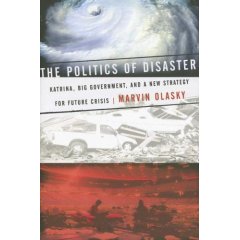
Tim Challies also brings our attention to a new Marvin Olasky work called The Politics of Disaster and provides a fine summary.


Wednesday, September 06, 2006

A Great Quote by Kyle Lake

I just saw this:

"Here is what I think God is saying to each of us, 'Abandon your plans of escape. And Be where you are. '"

Kyle Lake (1972 - 2005).

Kyle was electrocuted while conducting a baptism last year.

Tuesday, September 05, 2006

Monday, September 04, 2006

OK Go - Here It Goes Again

This is just too fun. No computer effects. Low budget. Just creative.

andrew jackson on tim challies upcoming book...

...or, rather, on the fact that there is an upcoming tim challies book. andrew's brief comments illustrate the declining cost of information.

we've discussed elsewhere that as the cost of information declines, society changes.

Saturday, September 02, 2006

$.50 English Standard Version New Testaments


We'll probably buy a bunch of these for KatrinaGrace.

I really love this translation.

Friday, September 01, 2006

Archbishop of Canterbury Rowan Williams Reported to have Changed Positions on Homosexuals and the Anglican Church

"The archbishop of Canterbury has told homosexuals that they need to change their behaviour if they are to be welcomed into the church, The Sunday Telegraph can reveal.

Rowan Williams has distanced himself from his one-time liberal support of gay relationships and stressed that the tradition and teaching of the Church has in no way been altered by the Anglican Communion's consecration of its first openly homosexual bishop.

The declaration by the archbishop - rebutting the idea that homosexuals should be included in the church unconditionally - marks a significant development in the church's crisis over homosexuals. According to liberal and homosexual campaigners, it confirmed their fears that the archbishop has become increasingly conservative - and sparked accusations that he has performed an "astonishing" U-turn over the homosexual issue."

- the telegraph (uk)

Thursday, August 31, 2006

michael spencer...

...was bitten 2x and lives to blog ab it here: toward a Christian approach to homosexuals and homosexuality.

Wednesday, August 30, 2006

the sometimes two-dimensionalization of media coverage

daniel pulliam of the excellent get religion blog revisits the recent story where a pastor fired a long-time sunday school teacher who was a woman.

sometimes it's easy for a media outlet to collapse a story down to a simple binary instead of exploring its complexity.

Monday, August 28, 2006

An Around the Room On The Emerging Church

Justin Taylor, the English Standard Version Bible Project Manager at Crossway , has written a primer on the emerging church.

taylor's primer is featured in a recent 9Marks newsletter on the emerging church, which also features:

I'm looking forward to reviewing this.

Sunday, August 27, 2006

unusual stories of direct encounters

a friend of mine and I are discussing the idea of relying on experience overmuch. i don't know what to tell you about this story.

it reminds me of a what a charismatic catholic blind date told me one evening. she said that she was praying to mary when mary said to her, "what are talking to me for? talk to Jesus!"

it reminds me of a story a seminary prof told me of a man who was preaching one day and suddenly interrupted himself with, "There he is! He's beautiful! He's beautiful!" and then dropped dead.

for your consideration.

Saturday, August 26, 2006

kudos to the rev john stevens

"Twelve-year-old Joe recently asked Jesus to live in his heart.

Yet the church where Joe accepted his Savior not even two weeks before will no longer allow the biracial boy to enter.

On Aug. 6, during its scheduled Sunday night business meeting, Fellowship Baptist Church in Saltillo voted not to accept blacks within the church. More specifically, the congregation also voted Joe out and said he could not return.

That evening Fellowship Baptist did not just say goodbye to Joe and an entire race of humans. With that decision the church's pastor, the Rev. John Stevens, resigned....

That evening Fellowship Baptist did not just say goodbye to Joe and an entire race of humans. With that decision the church's pastor, the Rev. John Stevens, resigned..."

- entire story

ht: jesus outside the box

UPDATE: "After the Daily Journal contacted Fellowship Baptist members, they gathered Aug. 17 to form a response. Mike Dillard, who acted as spokesperson for the church, said the congregation "categorically denies" accusations that the church took such a vote and feels the charge is an attempt by a party to do them harm."

- link to updated story

It'll be interesting to see if this piece gets picked up and investigated by a larger media outlet.

Hands from the Past


from Wikipedia:

"The hand paintings seen here at the Cueva de las Manos in Santa Cruz Province, Argentina were created between 13,000 and 9,300 years ago using bone-made pipes for spraying the paint on the wall. Most of the hands are left hands, which suggests that painters held the spraying pipe with their dexterous hand. The cave is listed as a UNESCO World Heritage Site."

Friday, August 25, 2006

Seeking A Fresh View of Jesus

I am really wanting to get a fresh view of Jesus.

I find that I tend to get lost in religious busyness and theological and ecclesial blah blah blah. It's not that I don't think the latter has its place - it does. It's just that I think it can't be the core of religious experience - the experience of a real and daily relationship with God. I want more. I want my walk with God to be transpropositional (which - of course - includes the propositional). David Brainard used to talk about people who talked about the shell rather than talking about the nut. That's what I'm talking about; I'm tired of all shell all the time. And I'm talking about myself.

To that end, today I made a couple of decisions (I'm only sharing some of them).

I plan to read each Gospel again while reading at least one excellent commentary for each one. I like Luke for its apologetic value and so I'm going to begin there. I just ordered the 1st volume of Darrell Bock's set on Luke. I'll be using DA Carson's excellent little volume on best NT commentaries and other sources to guide me as I choose commentaries. I'll probably hit Donald Guthrie and Luke itself of course while I wait for Bock's volume to arrive.

Bock recently blogged on commentaries he recommends.

I wonder if we might convince Scot McKnight, who edited the excellent Dictionary of Jesus and the Gospels, to do the same?

Wednesday, August 23, 2006

A Change of Season: The End of the Faithmaps Discussion Group

Yesterday, I announced to the faithmaps discussion group that I had decided to end the group sometime on Friday 1 Sept. Here is some of what I wrote in the announcement:

------------------

It is with sadness that I let you know that after five years of moderating the faithmaps discussion group, I've decided to end the group.

I have come to the conclusion that my current life situation and calling is such that I no longer feel that I can give moderating this group the time that it needs and deserves.

What's true now that wasn't when we started in May of 2001:

* Beth and I co-lead KatrinaGrace which just decided to branch out into working with Habitat for Humanity in Slidell, LA in addition to continuing the work we're doing with Compassion Ministries just north of NO. By God's grace we're planning on sending a team a month between October 2006 and Nov 2007 to New Orleans' North Shore. Our church's Sunday 27 Aug service is entirely dedicated to KatrinaRelief. We are very excited about this work. 60 folks on 8 Teams have so far gone down and we're hoping to send a lot more.

* Since April of 2005 I've been serving on my local church's Leadership Development Team and just a few weeks ago we launched our mentor/protege - workshop based process. I'm one of the Workshop Facilitators. We've been able to implement a lot of the transpropositional approaches we've developed and discussed here.

* [I've been getting professional writing jobs with a national Christian organization].

* I continue to post to my blog almost daily.

* And, as I've mentioned, three years ago I executed a major life change and intentionally began devoting less time to my online activities and more time to the four most important people in my life.

* And then there's the whole full-time job with USA TODAY thing which really cuts into my free time. ;)


And so, sometime on Friday 1 September, I plan to turn the group off. I do not plan to delete the group. Archives will still be searchable and accessible to the public as always. There is such a rich treasure store of posts here that I would hate to see lost.

One day I may start another group or restart this one. But I don't know if that will happen.

I don't intend not to participate in groups, just not to moderate one. So you'll probably see me around.

It's my hope that the community and discussions that began here will continue in some context. And so one reason I wanted to give several day notice was to invite those on this list with other groups - or those on this list that wish to start new groups - to feel perfectly free to solicit members here during the next 9 days.

But it is a change and it is a loss and I will miss the group that is faithmaps. I know there is more to say but I can't put it all into words. Maybe I'll be able to betw now and 1 Sept.

Thank you all for all you've given me here. I'm very grateful. I have made mistakes as a moderator and you've been patient and gracious to me

This, of course, isn't goodbye. It's just a change of season.

--------------------------------

The driving force in my decision was the amount of time that I could dedicate to the group. Our environment was unique because there were only two criteria of participation: interest in "theology, leadership, & praxis in the emerging church" and respect. Anyone could join and this led to some rather interesting discussion! I had come to the conclusion that the group needed more constant attention than I could give it and rather than setting up a team of moderators - which I thought might still take a lot of my time and effort - I decided to let folks explore other options.

It was not an easy decision and one that I make with some sadness.

I gained so much from this community. The faithstory online small groups that we've iteratively offered were wonderful. I made some great friends thru the group. But I felt that for me it was time to move on.

faithmaps.org, however, will continue...as will this blog.

Tuesday, August 22, 2006

katrina: where did the money go?

Someone commented to our earlier post about Katrina stats one year later:

" My heart goes out to those rebuilding their lives!

Are there any sound sources that have tracked where all the money has gone? Is this even possible?"

Charity Navigator - a great place to go when you're evaluating charities - has posted a "One Year Later" series of articles analyzing how the philantropic response went.

Monday, August 21, 2006

katrina by the numbers, part 2: 1 year later

USA TODAY poll in today's paper:

  • 16% - those who say that their lives are back to normal one year later
  • 56% - those with kids under 18 who say that their kids have been negatively affected by the storm
  • 25% - those who have not moved back
  • 20% - number of those who have moved back but believe they may need to move out again
  • 14% - those currently unemployed
  • "those who say they are experiencing a great deal or quite a bit of"
    • anxiety - 27%
    • trouble sleeping - 26%
    • depression - 23%
    • "difficulties in marriage or other family relationships" - 18%
  • Top 5 Most Difficult Things to Deal with Since Katrina:
    1. damaged property
    2. financial problems
    3. mental or emotional sate
    4. "getting our lives back on track"
    5. "no longer having a job"
  • Top 5 Types of Help Most Desired to Recover from Katrina
    1. $
    2. help with damage or contractors
    3. more FEMA help
    4. "a place to stay"
    5. a job

- USA TODAY related story.

- katrina by the numbers, part 1: the impact of the storm

Sunday, August 20, 2006

Office 2007 Beta 2: MS Word

I had been working on an article and the editor asked me to use track changes in Word. My Office 2000 Word Track Changes functionality didn't seem terribly robust, and so I downloaded Office 2007 Beta 2.

I really like it and it seems to be a major upgrade. I've only been using it a few days but already I've very much appreciated the rich Review functionality. Redmond has also moved away from menu based options toward what they call "The Ribbon." The wikipedia article puts it well:

"These applications have been selected for the UI overhaul, because those applications center around document authoring and present a multitude of options to the same regard."

You can now blog from within Word, though that functionality has been available as an add-in for a while now.

It costs $1.50 to download Office 2007 Beta 2 and the product will cease functioning on 1 Feb 2007.

I definitely intend to upgrade.

Friday, August 18, 2006

The Spiritual Journey of Bob Dylan

"What makes Rolling Thunder and the Gospel Years unique, however, is that it is the only project of its kind to explore the years during which Dylan was scandalizing the pop-culture world with recordings and performances that proclaimed Jesus Christ as the only way to salvation.

"A lot of Dylan fans are not understanding or tolerant of Dylan's gospel period or the music," Gilbert told WORLD. "But they really should love that period. That's why I was happy to delve into the subject and help give an honest appraisal."


- World Magazine Cover Story on Rolling Thunder and the Gospel Years - a documentary that delves into Dylan's publicly Christian period.

ht: andrew jackson

Thursday, August 17, 2006

a great quote from john wimber

"Don’t be afraid of pain. All my life I’ve been afraid of pain. But pain’s not so bad. I’ve been in the valley and it’s not so bad. In fact the view is wonderful. You never get to see Jesus quite as well as you do in the valley.

It isn’t prosperity that gives you the complete, the indepth, the intimate view of Jesus. It’s pain. It’s in the midst of pain, it’s in the midst of heartbreak, it’s in the midst of the rendering of relationships, its in the midst of tragic circumstances that you get the heart of God revealed to you.

So don’t be afraid of pain. If God’s allowed it he’ll have purpose in it. . . I love and know my Savior today more than I have ever known him. And I am now 31 years in the Lord. I’m so grateful for cancer. I’m so grateful that I went through it. Because I could never have known Jesus the way I now know him. And frankly I could never have known my wife the way I now know her."

- wikipedia on john wimber

ht: steve addison

Wednesday, August 16, 2006

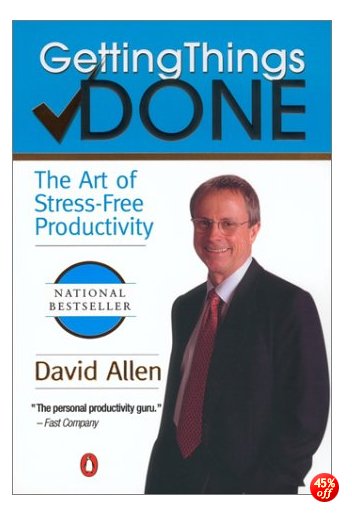
"Getting Things Done"

This book by David Allen is rockin my world. I'm still wrapping my brain around it but it's already making a difference. Definitely get the book, but the wikipedia summary is good and here's the whole process in a few simple graphs (pick one).

here's another nice summary.

also see

- the 43 folders wiki
- lifehack
- a Wired News story on the cultesque status of this movement

- for a summary of various software options for implementing GTD, see Getting Things Done Software Systems, part 1 and part 2 by downloadsquad.

Tuesday, August 15, 2006

the gospel, justice and culture

i've been really enjoying and benefiting from listening to some of the talks given at the May 2006 Reform and Resurgence Conference. ed stetzer gave two really helpful talks on culture - one more visionary and one more practical. and tim keller's talk on the gospel and his talk on social justice were both very good. audio and video links are avail at the conference site.

these talks are highly recommended.

stetzer also pointed everyone to a very helpful demographic resource peoplegroups.


Sunday, August 13, 2006

fred peatross...

...has ended his summer sabbatical and has restarted Abductive Columns.

a seed of hope

"When he was told a Jewish man was the donor, Elias was confused, the doctor said.

"There is a war between Israelis and Arabs on the one hand, and he is getting the cornea of a Jewish man, who was killed by an Arab missile," Rehany said."

- ABC news link

dissertation on emerging church blogs

bryan murley is writing a scholarly paper on the top 50 emerging church blogs as defined by technorati.

should be an interesting read.

Saturday, August 12, 2006

Breaking News: Cease Fire Agreed to for Monday

-link

let's hope it sticks.

paper clips


Almost every Friday night, Beth, Michaela (10), Skye (8), and Alia (6), and I have "Family Movie Night." Tonight we decided to watch Paper Clips, a movie about what happened when in 1998 a Whitwell, TN middle school decided to collect one paper clip for every one of the six million souls that lost their lives in the Holocaust. This exclusively Protestant and almost entirely white community wished to learn about tolerance and diversity.

In October of 2001, the school was able to put 11 million paperclips (now including other groups killed by the Third Reich) in a railcar that they had found and arranged to have shipped to the US that became part of a memorial at the school.

The material was too old for Li-Li and a challenge for Skye, but Chaela and I sat thru the whole thing (Beth left with Alia).

It's a wonderful, wonderful deeply moving documentary and I highly recommend it.

Friday, August 11, 2006

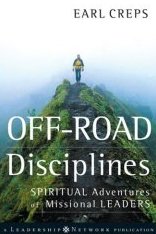
Off-Road Disciplines: Spiritual Adventures of Missional Leaders

In the faithmaps discussion group, I recently asked one of our participants, Earl Creps - who is Associate Professor of Leadership and Spiritual Renewal at AGTS, to say a few worlds about his new book.

"My book is called Off-Road Disciplines: Spiritual Adventures of Missional Leaders. I wrote it really out of my own shortcomings, so the supply of raw material was ample. Over some years in ministry, and especially after being in relationship with a number of younger leaders I noticed a disturbing trend: almost everything that God was doing to shape my life seemed to be happening outside the "official" list of spiritual disciplines (at least as understood by a used-to-be-a-Lutheran Pentecostal like me). So I began pulling together some of my experiences an came up with 12 "off-road" disciplines, spiritually formative experiences that we encounter, well, off-road, complete with all the dust, bumps, and bruises that go with leaving the pavement. After the fact, these practices seemed to fall into 6 personal (e.g., reverse mentoring) and 6 organizational (e.g., passing the baton).

I talked about some of these ideas at a conference in California last year. The talk went so badly that about 1/2 the audience left before it was over, but one of the people who stayed was an editor for Jossey-Bass. So J-B and Leadership Network have partnered to publish the book."

Endorsements:

Len Sweet:

“This is one of the most exciting books I have read in years. It shifts our focus from doing church to being church, and promises to be a standard reference in all future discussions of missional leadership.”

Todd Hunter:

“If you are trying to figure out what is going on in contemporary culture you’ve got to read Off-road Disciplines. Creps not only knows what is going on today, he teaches us how to engage today’s people as well. The chapter on “reverse mentoring” is worth the price of the book. No one can be effective in ministry today without the skills and attitudes associated with listening and conversation. Off-Road Disciplines gives us the map and points us in the right direction.”

Ed Stetzer:

“Earl Creps has written a deeply personal and challenging book--one that caused me to think about my own spiritual journey. Too many of us have made spiritual formation a series of activities and programs; Earl takes us off the map of common practice and into the places where the Spirit is at work. It reminds us that true spiritual formation pervades our lives and the ministries we serve, providing a helpful balance of being

and doing. It will be a great encouragement to all who read it.”

Thursday, August 10, 2006

geekesque: From Dell to HP


Ok, so I had blogged earlier that I ordered a Dell E1505. Then I read gregg caruso's post about them blowing up and the terrible customer service he received.

Then I decided to upgrade my warranty to change it from the standard 1 year mail-in to 2 years on-site. When I bought my last Dell Inspiron 6 years ago, I had a 3 year on-site warranty and I ended up using it 2x

It took 4 or 5 calls over the course of 90 minutes before they told me that I could not do that over the phone. What I had to do was to cancel the order by phone, then go back online and reorder the box with the better warranty. And so I did.

Until now, I had always had superb service from Dell. The last two boxes I've gotten have been from Dell. So this runaround was pretty disappointing and sobering particularly since I was calling to give them more money.

But then when I read that the keyboard was a bit stiff, because I have repetitive stress issues with my hands, I decided to walk into some stores, find some notebooks with keyboards I like, and then check the CNET Reviews. I finally landed on HP's dv2000t. CNET likes it and, less importantly, it's one of the most beautiful laptops I'ver ever seen.

I called Dell again, cancelled my order, ordered the HP box online so that I could trick it out and get a really nice printer for only $20. Should be here in about 10 days or so.


image from notebook review

on writing well

from Leadership Journal:

Use action verbs
Forms of the verb “to be”—is, was, were, etc., make for dead writing. In every possible case, pick forceful verbs.

Use anecdotes
Each point in a Leadership article needs a carefully chosen illustration, colorfully written. By basing principles in specific experiences, we show how to minister effectively amid the complexity and ambiguity of real life.

Use short sentences whenever possible
Variety of length, of course, contributes to good style, but writers err more often with too many long sentences than short ones.

Use long words only when necessary
Some critics claim scholars and professionals purposely write to obfuscate meaning, to cover fuzzy thinking, or to sound intellectual. Of this Leadership writers will never be guilty!

Assume your reader bores easily
Remember, if he flips the page from lack of interest, you’ve lost! Keep asking yourself, “What grabs my attention? An illustration? A fresh insight? A well-turned phrase?” Keep the reader with you by introducing a constant stream of interesting material.

After writing your manuscript, go through it and see how many action verbs you have. Mark each noun you can taste, hear, see, smell, or feel. You can see hubcaps, handkerchiefs, coffee mugs, and lightning bugs. Good writers fill their prose with objects you literally see in your mind’s eye. Be as specific as possible. For instance, “Toyota” is better than “car” for conjuring up an image.

ht: Steve Addison

Tuesday, August 08, 2006

please pray for bob robinson and...

...his heart.

more on spencer burke's new book

scot mcknight completes his series:

- part 1

- part 2

- part 3

- part 4

I had earlier posted excerpts form parts 1 and 2.

Here are excerpts from part 4:

"

1. He doesn’t believe God is a “person” (195): “I’m not sure I believe in God exclusively as a person anymore either…. The truth is that seeing God as spirit more than person doesn’t destroy my faith” (195).

Instead, he is a panentheist — which means that “God is ‘in all,’ alongside my creedal view of God as Father, Son, and Spirit” (195). He emphasizes immanence, “radical connectedness” and “relational theology.” [Again, this is flat-out wrong: “panentheism” is not the view that God is in all but that all is in God, and there’s a big diference.]

[I will confess to you when I read that God is not a person, my blood boiled. To deny personhood to God, the hypostasis or “person”hood, denies the essence of Christian orthodoxy and the sole foundation for our personhood and the essence both of what the gospel is — restoring cracked (person-ed) Eikons to God, who is person — and what redemption is. This genuinely is what theologians have always called “heresy.” When he says he accepts the creedal view of Father, Son, and Spirit and then says he doesn’t believe God is “person” but “spirit” — frankly, this last statement completely undermines the former. What are the FAther, Son, and Spirit but the persons of the Godhead?]"

mcknight concludes:

"But, I have a responsibility before God to be faithful to the gospel, so I have to say the following — and I don’t do so with anything but sadness.

... I want to express my dismay today over what I think is crossing the boundaries. I will have to be frank; but I have to be fair. Here’s how I see this book’s theology as a Christian theologian. The more I ponder what Spencer does in this book, the more direct I have become — be glad I don’t have any more posts about this book.

Is Spencer a “heretic”? He says he is, and I see no reason to think he believes in the Trinity from reading this book. That’s what heresy means to me. Denial of God’s personhood flies in the face of everything orthodox. To say that you believe in the creedal view of God as Father, Son, and Spirit and deny “person” is to deny the Trinitarian concept of God.

Is Spencer a “Christian”? He says he is. What is a Christian? Is it not one who finds redemption through faith in Christ, the one who died and who was raised? If so, I see nothing in this book that makes me think that God’s grace comes to us through the death and resurrection of Christ. Grace seems to be what each person is “born into” in Spencer’s theses in this book. That means that I see no reason in this book to think Spencer believes in the gospel as the NT defines gospel (grace as the gift of God through Christ by faith).

I must say this: Spencer told me on the phone that he thinks all are included in God’s grace from the start solely because of Jesus’ death and resurrection; why not write that in this book?

Spencer, you’re a good guy. But I have to say this to you: Go back to church. Go back to the gospel of Jesus — crucified and raised. Let the whole Bible shape all of your theology. Listen to your critics. Integrate a robust Christology, a robust death-and-resurrection gospel, and a full Trinitarian theology back into your guide to eternity."

there's going to be a new Star Trek movie...


...enjoy infinite speculation here.

Monday, August 07, 2006

Mars Hill Audio...


launches a podcast!

ht: brad boydston

we had commented some time ago on how very, very helpful mars hill audio is.

Sunday, August 06, 2006

on writing: why i love the chicago manual of style


When you're writing for hire, you think twice about things you typically do while writing that you now realize will garner an editor's scrutiny. For me, one of those things was beginning sentences with "but," which historically I've done with wanton abandon. Some time ago I invested in the latest edition of the Chicago Manual of Style to assist me with such projects. Feeling a growing sense of angst over my predisposition to begin sentences with conjunctions, this morning I flipped to my index and eventually found words I might have crafted in a daydream:

"There is a widespread belief - one with no historical or grammatical foundation - that it is an error to begin a sentence with a conjunction such as and, but, or so. In fact, a substantial percentage (often as many as 10 percent) of the sentences in first-rate writing begin with conjunctions. It has been so for centuries, and even the most conservative grammarians have followed this practice. Charles Allen Lloyd's 1938 words fairly sum up the situation as it stands even today: 'Next to the groundless notion that it is incorrect to end an English sentence with a preposition, perhaps the most wide-spread of the many false beliefs about the use of our language is the equally groundless notion that it is incorrect to begin one with 'but' or 'and.' As in the case of the superstition about the prepositional ending, no textbook supports it, but apparently about half of our teachers of English go out of their way to handicap their pupils by inculcating it. One cannot help wondering whether those who teach such a monstrous doctine ever read any English themselves'"(pp. 193,194).

I'm not making this up.

"Sweet freedom whispered in my ears and I fly away."

books on the book

brother maynard does an around the room of those who make commentary recommendations. very helpful.

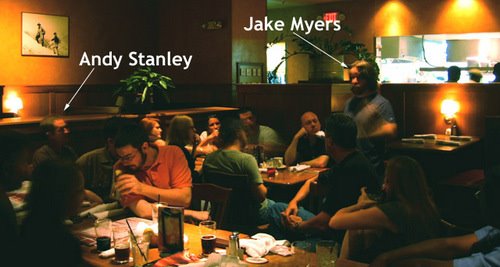
andy stanley visits an emergent cohort


per Adam Cleaveland via Brother Maynard

Saturday, August 05, 2006

flaming laptops!

a couple of hours ago, I purchased Dell Inspiron E1505 Laptop and then read gregg caruso's post about flaming Dell laptops (with pictures) and his comment:

"I'm not a big fan of Dell computers. Last year I went through three replacement computers on a new purchase and finally switched to Mac. Both the service and the quality were extremely poor and I eventually needed to file a claim with the better business bureau."

This was the third Dell we've purchased since 2000 and so far I've been delighted with them. But we'll see!

a great john owens quote

"Every act of sin is a fruit of being weary of God."

ht: justin taylor via david wayne.

- the writings of john owens

Friday, August 04, 2006

help from anne lamott

i'm working on a first draft for a very long article i've been hired to write and I'm watching bad sentence after bad sentence pouring through my fingers onto the screen. i just read somewhere that anne lamott said something about the necessity of bad first drafts and googled her name and "first draft" and found a wonderful excerpt of her Bird by Bird:

"People tend to look at successful writers who are getting their books published and maybe even doing well financially, and think that they sit down at their desks every morning feeling like a million dollars, feeling great about who they are and how much talent they have and what a great story they have to tell; that they take in a few deep breaths, push back their sleeves, roll their necks a few times to get all the cricks out, and dive in, typing fully formed passages as fast as a court reporter. But this is just the fantasy of the uninitiated. I know some very great writers, writers you love who write beautifully and have made a great deal of money, and not one of them sits down routinely feeling wildly enthusiastic and confident. Not one of them writes elegant first drafts."

- full excerpt which does not read as if it were a first draft

ok, posting that made me feel better. back to my bad writing!

watch this spot!

my friend, carmen c dicello, author of Dangerous Blessing and a contributor to the New Dictionary of Apologetics has launched a blog.

Thursday, August 03, 2006

objective news sources on hezbollah and israel

some folks in response to earlier posts have been commenting with preferred news sources for the coverage of the conflict.

please feel free to comment here with the news sites you have found to be the most reliable.

thanks,

emergent village's new website

has officially been launched

with

their board of directors

and

their coordinating group

and

a weblog

and

a podcast.

israel, lebanon, and hezbollah

jordon serves up a helpful around-the-room of christian comment on the current middle east crisis.

scot mcknight reviews spencer burke's new book

excerpts:

"What I most like about this book is that Spencer is committed to Jesus. Here are his words:

“Do I remain personally committed to Jesus and his teachings as found in the Bible? I do” (11)."

but

"Spencer’s operative definition of love, though never stated, is tolerance, niceness, relational network, non-condemning, and respect of others. Fine — but that is not how Jesus defined it or practiced it. No matter how hard it is for us, Matthew 23 and chps. 5-7 have to be wedged into our definition of love if we want to “follow Jesus” in his teachings. To use Jesus’ term love to defend the inclusiveness found in Heretic’s Guide is to surrender what Jesus meant by it. I don’t know how Spencer can say Jesus “didn’t condemn” (139)."

and

"John 14:6 comes up twice in these chapters. Here’s what Spencer says:

1. Christianity didn’t exist as a religion when Jesus wrote these words. (If he means “institutional church,” he’s right. I don’t see any connection to John 14:6 in this point: it has to do with following Jesus rather than joining a religion.)
2. No one recorded the words of Jesus. (Probable, but Bob Gundry’s dissertation argued otherwise; others have contended the oral tradition was strong enough that what Jesus said was remembered.)
3. So we have no proof these are his words. (Spencer, don’t play that game unless you know what you are talking about.)
4. He spoke in Aramaic, therefore we can’t take anything literally. (Spencer, you’ve got to be kidding me; this flies in the face of all translation theory.)"


Wednesday, August 02, 2006

greg gilbert on greg boyd and politics in the pulpit

"Life and Marriage have been swept up into our national politics in the last thirty years. Both of them are undeniably “political issues” now. But long before they became that, they were issues about which God spoke to us in Scripture, and that doesn’t change just because the nation has developed an interest in them. It’s true that the church should never become just a wing of any political party. But the church has to speak where Scripture speaks, and Scripture most definitely speaks about abortion and marriage. Whether one political party or another decides to agree with us is beside the point."

- link
- Greg Boyd in the NY Times

Tuesday, August 01, 2006